US Waves of Strikes Target 100 IRGC Sites Following Chokepoint Projectile Attacks
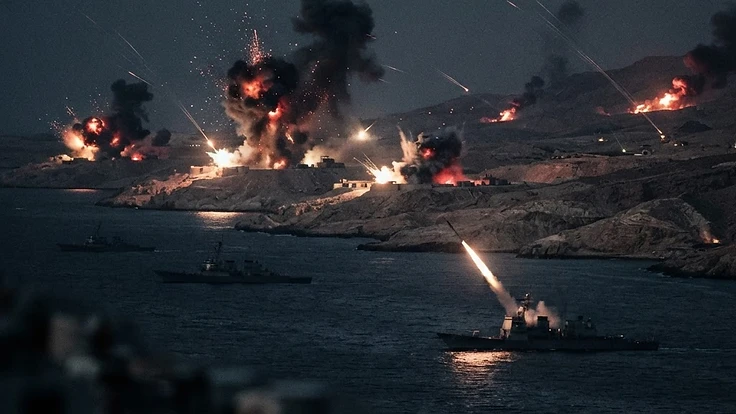
United States military forces struck approximately 100 Iranian military targets across coastal positions following projectile attacks against commercial tankers in the Strait of Hormuz. Defense officials indicated the precision operation focused on degrading coastal defense radars, drone launchers, and mine-laying assets.

Your ad here — 728×90 banner space
Coordinated Retaliation Across Maritime Launch Corridors
United States military operations intensified significantly across the Persian Gulf theater following projectile strikes against commercial vessels navigating the Strait of Hormuz. According to U.S. defense officials cited by Axios, American forces hit approximately 100 Iranian military targets during an extensive overnight strike package aimed at blunting the Islamic Revolutionary Guard Corps' (IRGC) ability to contest maritime passage.
The targets neutralized during the strikes included IRGC air defense batteries, coastal surveillance radar installations, anti-ship cruise missile (ASCM) firing points, attack drone staging facilities, and specialized naval mine-laying depots. Defense planners characterized the sustained counter-battery actions as an effort to systematically reduce the immediate threat profile confronting merchant convoys, with one defense official noting the operational intent was designed to buy at least a month of degraded adversary capabilities.
Chokepoint Under Direct Crosshairs
The coordinated wave of U.S. strikes followed a serious escalation inside the strategic chokepoint, where two merchant tankers laden with crude oil were struck overnight by unidentified ordnance. Greek maritime risk management firm Marisks confirmed the projectile impacts, which prompted immediate diplomatic condemnation from Riyadh and surrounding Gulf Cooperation Council capitals.
Regional security warnings expanded rapidly following the strike wave. The U.S. Embassy in Jerusalem issued formal security notifications advising personnel across the wider Middle East of heightened operational risks, while Bahrain’s Interior Ministry placed internal security mechanisms on heightened alert following retaliatory ballistic and drone salvos directed across regional borders toward sites in Jordan, Kuwait, Bahrain, and Iraq.
Strategic Divergence Over Passage Control
Political leadership in Washington signaled an uncompromising posture regarding maritime enforcement. President Donald Trump publicly stated that the U.S. armed forces maintain "almost total control of the Hormuz Strait" as secondary economic sanctions continue to constrain Tehran’s export avenues. Trump reiterated that Washington would not compromise on operational safety inside international corridors.
Conversely, Iran’s joint military command issued a sharp counter-warning, declaring that American military actions would be met with expanded responses and warning regional neighbors that facilitating coalition naval maneuvers would carry severe operational consequences. With both sides trading kinetic barrages, maritime tracking services note that merchant movements through the corridor remain severely curtailed, cementing a prolonged state of high-intensity operational friction.
Related Intel

Tehran Outlines Formal Exclusion Zone Around Hormuz to Counter US Blockade
Iranian security officials have announced imminent plans to implement an operational maritime exclusion zone stretching from the U.S. naval blockade perimeter directly across the Strait of Hormuz.

US Neutralizes IRGC Tankers off Kharg Island as Diplomatic Narrative Fractures
U.S. Central Command disabled three Iranian crude carriers over the weekend following IRGC missile launches against American warships, escalating the maritime conflict into its seventh month.

CENTCOM Destroys Iranian Tankers and Coastal Launch Sites as Tehran Claims Drone Intercepts
U.S. Central Command struck three Iranian oil tankers and pre-positioned coastal minelaying missile platforms, while Tehran claimed to strike an unmanned American naval vessel in contested Hormuz waters.