Tehran Outlines Formal Exclusion Zone Around Hormuz to Counter US Blockade
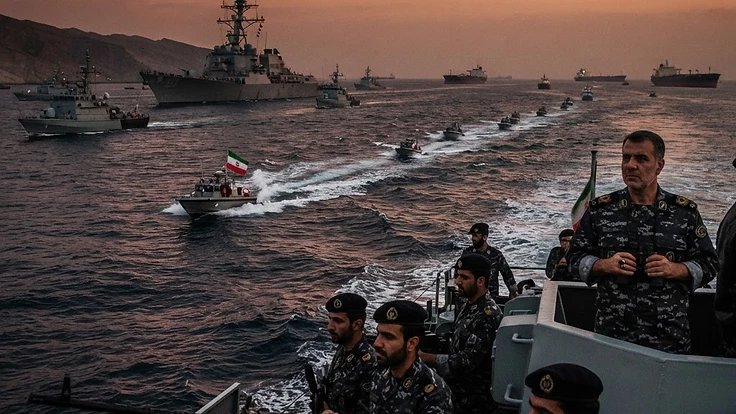
Iranian security officials have announced imminent plans to implement an operational maritime exclusion zone stretching from the U.S. naval blockade perimeter directly across the Strait of Hormuz.

Your ad here — 728×90 banner space
Iranian authorities confirmed plans to officially institute a designated maritime exclusion zone encompassing the approaches to the Strait of Hormuz, threatening retaliatory sanctions and maritime interdictions against any commercial or naval vessels entering without express authorization from Tehran.
According to senior Iranian security official Major General Mohsen Rezaei, the proposed restricted zone will originate along the perimeter of the existing U.S. naval blockade line and extend inward across the critical chokepoint into the Persian Gulf. Rezaei warned that any ship detected entering the designated perimeter bound for transit through the Strait will immediately face placement on Iranian maritime sanctions lists and risk direct enforcement actions.
Addressing state media, Rezaei stated that Iranian armed forces have repeatedly targeted U.S.-affiliated vessels attempting unauthorized passage, claiming that Iranian commands have deliberately refrained from sinking targeted commercial carriers to prevent massive environmental destruction and catastrophic oil spills in the sensitive marine ecosystem. The move follows direct naval crossfire over recent days, during which the Pentagon's U.S. Central Command (CENTCOM) struck Iranian oil tankers near Kharg Island, Jask, and the Gulf of Oman, prompting the Islamic Revolutionary Guard Corps (IRGC) to retaliate against three U.S.-linked commercial tankers operating within the corridor.
Commercial vessel traffic through the waterway has already cratered in response to mounting hostilities. Rezaei claimed that baseline traffic exceeding 100 commercial vessels daily prior to the conflict has ceased, with Iranian maritime tracking operations permitting only a strictly vetted volume of essential domestic inbound cargo. Maritime intelligence sources underscore that formalizing an exclusion zone could serve as a legal pretext for expanded boarding operations, aerial drone harassment, and kinetic strikes against neutral merchantmen crossing the narrow corridor.