US Treasury Targets Iranian Drone Procurement and Shadow Fleet Facilitators
New U.S. sanctions target companies and individuals in Hong Kong and the UAE involved in procuring parts for Iran's Shahed-series UAVs.
Your ad here — 728×90 banner space
The U.S. Department of the Treasury’s Office of Foreign Assets Control (OFAC) has announced a fresh round of sanctions aimed at dismantling the procurement networks that sustain Iran’s unmanned aerial vehicle (UAV) programs. According to the official statement released within the last 24 hours, the sanctions target five individuals and eleven entities based in Iran, the United Arab Emirates, and Hong Kong. These actors are accused of facilitating the acquisition of critical components—including servomotors and microelectronics—for the IRGC’s Aerospace Force and the Ministry of Defense and Armed Forces Logistics (MODAFL). These drone networks are central to the current geopolitical friction in the Middle East. The Shahed-series drones produced by Iran have not only been utilized by Russian forces in Ukraine but have also been supplied to regional proxies such as the Houthis in Yemen and various militias in Iraq and Syria. The U.S. Treasury Under Secretary for Terrorism and Financial Intelligence, Brian Nelson, stated that Iran’s continued proliferation of UAVs remains a destabilizing force that prolongs conflicts globally. Simultaneously, the U.S. is increasing pressure on the 'shadow fleet'—the aging tankers that transport Iranian crude in violation of secondary sanctions. Treasury officials highlighted that several of the sanctioned entities in Hong Kong acted as front companies, laundering the proceeds of illicit oil sales to fund the drone procurement programs. This 'circular economy' allows Tehran to maintain its military industrial complex despite being largely cut off from the global financial system. For shipping operators in the Strait of Hormuz, these sanctions represent an increased compliance risk. The use of deceptive shipping practices, such as disabling Automatic Identification Systems (AIS) and ship-to-ship transfers in the Gulf of Oman, remains a primary concern for maritime regulators. The Hormuz Sentinel Desk notes that the timing of these sanctions, coming during Iran's presidential transition, signals that the Biden administration does not intend to ease economic pressure despite the internal upheaval in Tehran. The IRGC has historically responded to such economic measures with increased naval assertiveness, suggesting a potential for renewed friction in the Persian Gulf maritime corridors in the coming weeks.
Related Intel
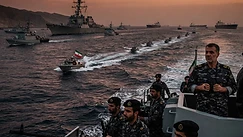
Tehran Outlines Formal Exclusion Zone Around Hormuz to Counter US Blockade
Iranian security officials have announced imminent plans to implement an operational maritime exclusion zone stretching from the U.S. naval blockade perimeter directly across the Strait of Hormuz.
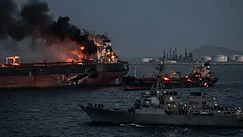
US Neutralizes IRGC Tankers off Kharg Island as Diplomatic Narrative Fractures
U.S. Central Command disabled three Iranian crude carriers over the weekend following IRGC missile launches against American warships, escalating the maritime conflict into its seventh month.
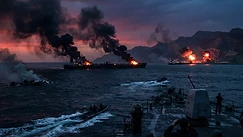
CENTCOM Destroys Iranian Tankers and Coastal Launch Sites as Tehran Claims Drone Intercepts
U.S. Central Command struck three Iranian oil tankers and pre-positioned coastal minelaying missile platforms, while Tehran claimed to strike an unmanned American naval vessel in contested Hormuz waters.