US Strikes Target Iranian Shadow Fleet as IRGC Claims Missile Attacks on Naval Assets
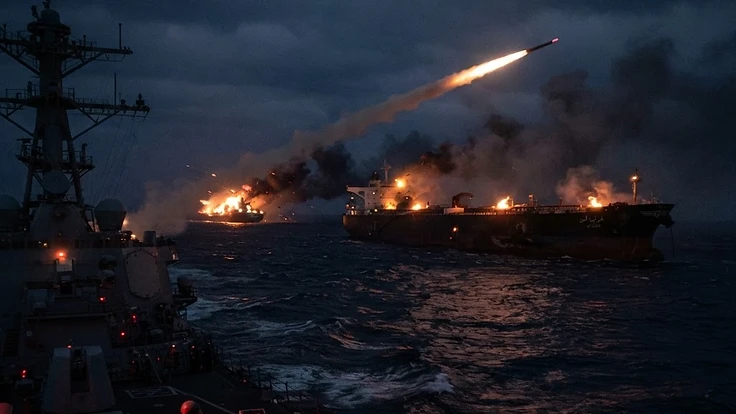
United States military forces conducted targeted air raids against three Iranian shadow network oil tankers, prompting Iran's Revolutionary Guards to claim retaliatory ballistic strikes against American warships.

Your ad here — 728×90 banner space
A direct military exchange unfolded across the Persian Gulf over the past 24 hours as the United States military carried out precision strikes targeting three oil tankers identified as components of Iran's illicit maritime transit network. Military sources confirmed the operations followed reports that regional naval assets had been targeted by ballistic projectiles launched from Iranian coastal batteries.
According to maritime and defense statements, the strikes aimed to degrade Tehran's capability to finance ongoing asymmetric maritime operations and bypass international export restrictions. The targeted vessels, operating under flags of convenience within the regional tanker network, were identified as critical transport nodes for crude transfers across the Gulf of Oman and beyond.
In immediate response, Iran's Islamic Revolutionary Guard Corps (IRGC) announced through state media channels that its coastal missile units fired salvos at an American aircraft carrier strike group and an accompanying guided-missile destroyer operating in adjacent international waters. While Western defense officials have not corroborated claims of hull breaches or disabling damage to U.S. warships, defense monitors confirmed defensive interceptor deployments across the operational sector.
This exchange marks a serious escalation in kinetic confrontation inside the lower Gulf. Armed forces from both sides traded direct fire in waters proximate to the Iranian coastline, prompting commercial ship masters to pause passage or seek shelter outside the chokepoint. Intelligence monitors note that the targeting of commercial crude haulers associated with the shadow fleet establishes a wider operational perimeter, increasing the probability of miscalculation or secondary strikes against non-combatant merchant traffic in international transit corridors.
Related Intel

Tehran Outlines Formal Exclusion Zone Around Hormuz to Counter US Blockade
Iranian security officials have announced imminent plans to implement an operational maritime exclusion zone stretching from the U.S. naval blockade perimeter directly across the Strait of Hormuz.

US Neutralizes IRGC Tankers off Kharg Island as Diplomatic Narrative Fractures
U.S. Central Command disabled three Iranian crude carriers over the weekend following IRGC missile launches against American warships, escalating the maritime conflict into its seventh month.

CENTCOM Destroys Iranian Tankers and Coastal Launch Sites as Tehran Claims Drone Intercepts
U.S. Central Command struck three Iranian oil tankers and pre-positioned coastal minelaying missile platforms, while Tehran claimed to strike an unmanned American naval vessel in contested Hormuz waters.