Escalation in Iraq: US-Saudi Joint Strikes Target Militia Infrastructure Following Multi-Day Drone Offensive
U.S. and Saudi Arabian forces conducted coordinated airstrikes against Iran-aligned paramilitary groups in Iraq following 72 hours of intense drone activity.

Your ad here — 728×90 banner space
Coordinated Retaliation Against the PMF
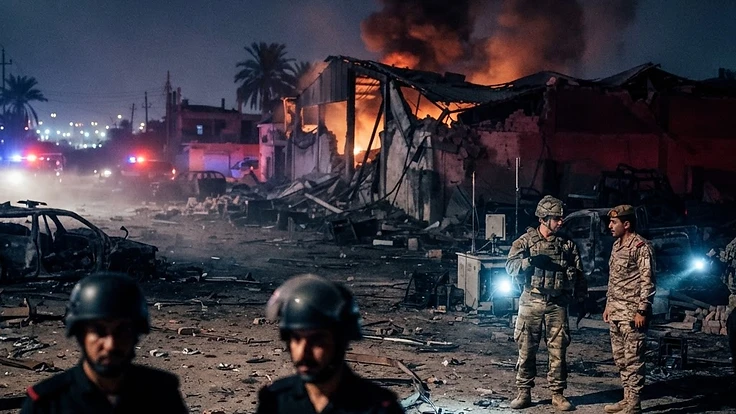
The security landscape in Iraq shifted dramatically on Wednesday as the U.S. and Saudi Arabian militaries executed joint strikes against positions held by the Popular Mobilization Forces (PMF). The PMF, an Iran-backed paramilitary alliance, confirmed that at least 20 of its fighters were killed and 32 others wounded in the operation. The strikes targeted headquarters and logistical hubs in Baghdad, Wasit, Nineveh, Basra, Kirkuk, Karbala, and Diyala, resulting in widespread infrastructure damage.
According to U.S. Central Command, the operation was a direct response to more than 30 aerial drone attacks launched against regional assets over the past 72 hours. These drone strikes were attributed to "Iran-aligned terrorists" operating under the direction of the IRGC. The decision to include Saudi Arabian forces in the kinetic response is seen as a major strategic development, signaling a unified front between Washington and Riyadh against Iranian proxy influence in Mesopotamia.
Tactical Assessments and Casualty Reports
Ground reports from Baghdad indicate that the strikes were highly precise, focusing on command-and-control centers and drone storage facilities. The PMF released a preliminary statement Wednesday morning decrying the "violation of Iraqi sovereignty" and warning of a severe response. However, the Iraqi government has remained largely silent, caught between its domestic reliance on PMF security and its international obligations to the coalition. The high casualty count among the PMF is expected to trigger a period of mourning and potential retaliatory rocket attacks against the 'Green Zone' and remaining U.S. logistical bases in the coming days.
Regional Strategy Shift
Analysts at the Hormuz Sentinel Desk believe this joint operation marks the beginning of a new phase in the conflict. By integrating Saudi air capabilities into strikes on Iraqi soil, the U.S. is demonstrating that the burden of regional security is being shared more broadly among allies. This also complicates Tehran's calculus, as any retaliation against Saudi assets can now be framed as an attack on the broader coalition effort. For the energy markets, this escalation in Iraq raises the risk of sabotage against pipelines and processing facilities in the Basra region, which remains a vital corridor for global crude supply.
Related Intel

Tehran Outlines Formal Exclusion Zone Around Hormuz to Counter US Blockade
Iranian security officials have announced imminent plans to implement an operational maritime exclusion zone stretching from the U.S. naval blockade perimeter directly across the Strait of Hormuz.

US Neutralizes IRGC Tankers off Kharg Island as Diplomatic Narrative Fractures
U.S. Central Command disabled three Iranian crude carriers over the weekend following IRGC missile launches against American warships, escalating the maritime conflict into its seventh month.

CENTCOM Destroys Iranian Tankers and Coastal Launch Sites as Tehran Claims Drone Intercepts
U.S. Central Command struck three Iranian oil tankers and pre-positioned coastal minelaying missile platforms, while Tehran claimed to strike an unmanned American naval vessel in contested Hormuz waters.