US Naval Force Posture: The Strategic Transition of Carrier Strike Groups
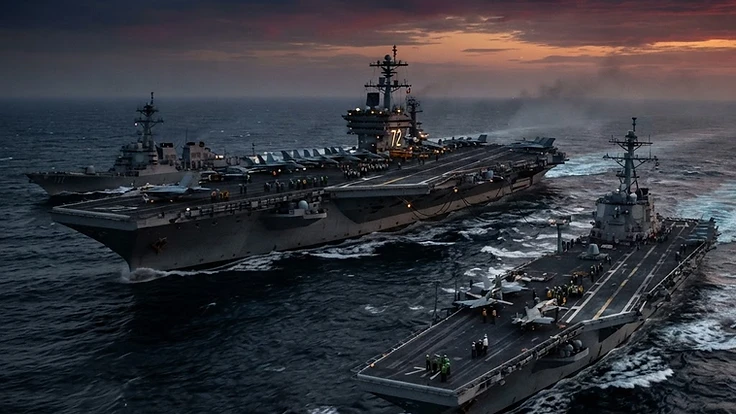
The Pentagon has ordered the USS Abraham Lincoln Carrier Strike Group to accelerate its transit to the Middle East to replace the USS Theodore Roosevelt.

Your ad here — 728×90 banner space
In a significant shift of maritime power projection, U.S. Secretary of Defense Lloyd Austin has directed the USS Abraham Lincoln Carrier Strike Group to expedite its arrival in the U.S. Central Command (CENTCOM) area of responsibility. This maneuver is designed to maintain a constant carrier presence as the USS Theodore Roosevelt prepares to depart the region. The move comes amid heightened tensions following the assassinations of high-ranking militant leaders in Tehran and Beirut, which have prompted threats of retaliation from Iran and its proxies.
The deployment of the Lincoln, which carries F-35C lightning II fighter jets, is augmented by the rare public announcement of the USS Georgia, an Ohio-class guided-missile submarine, being ordered to the same waters. According to Pentagon Press Secretary Major General Pat Ryder, these deployments are intended to bolster U.S. force protection and defend Israel against potential regional threats. The inclusion of the USS Georgia (SSGN 729) is particularly noteworthy, as the movements of the U.S. submarine fleet are typically classified. Its public disclosure serves as a clear deterrent signal to Tehran.
Strategically, the U.S. is aiming to mitigate the risk of a multi-front conflict. The presence of two carrier strike groups—briefly overlapping—provides an unprecedented level of surveillance and strike capability in the Gulf of Oman and the Eastern Mediterranean. Military analysts suggest that this buildup is not merely defensive but also a logistical preparation for a protracted period of high-alert operations. The naval assets are supported by additional land-based fighter squadrons, including F-22 Raptors, which have arrived in the theater to counter unmanned aerial systems (UAS) and cruise missile threats.
The logistical challenge of maintaining this level of readiness is substantial. The USS Abraham Lincoln must traverse the Pacific and Indian Oceans, a journey that tests the endurance of the crew and the efficiency of the Navy's supply chain. Meanwhile, regional partners including Jordan and Saudi Arabia are monitoring the transit closely, as the presence of these assets inevitably influences local air traffic control and maritime corridors. As the Lincoln nears the Arabian Sea, the geopolitical calculus for Iran becomes more complex, forcing a re-evaluation of the costs associated with a direct kinetic response against U.S. or allied interests.
Related Intel

Tehran Outlines Formal Exclusion Zone Around Hormuz to Counter US Blockade
Iranian security officials have announced imminent plans to implement an operational maritime exclusion zone stretching from the U.S. naval blockade perimeter directly across the Strait of Hormuz.

US Neutralizes IRGC Tankers off Kharg Island as Diplomatic Narrative Fractures
U.S. Central Command disabled three Iranian crude carriers over the weekend following IRGC missile launches against American warships, escalating the maritime conflict into its seventh month.

CENTCOM Destroys Iranian Tankers and Coastal Launch Sites as Tehran Claims Drone Intercepts
U.S. Central Command struck three Iranian oil tankers and pre-positioned coastal minelaying missile platforms, while Tehran claimed to strike an unmanned American naval vessel in contested Hormuz waters.