US Escorts 7 Million Barrels Through Hormuz Amid Surge in Gulf of Oman Tanker Transfers
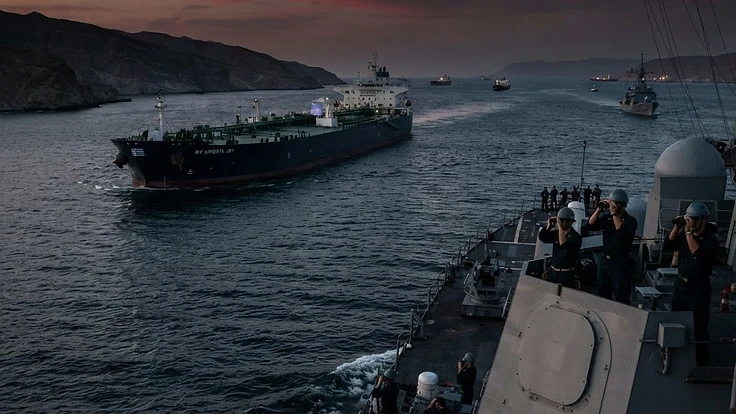
Commercial tankers carrying an estimated 7 million barrels are preparing to transit the Strait of Hormuz under US naval protection following intensive clearing operations in key maritime corridors. Maritime trackers concurrently identified at least 17 ship-to-ship crude and gas exchanges off the Omani coast involving 24 million barrels as operators bypass contested inner Gulf waters.

Your ad here — 728×90 banner space
A high-stakes logistics effort to move hydrocarbons out of the Persian Gulf is accelerating under direct coalition protection, even as commercial operators improvise offshore transfers to skirt active danger zones. TankerTrackers.com confirmed that oil and liquefied gas tankers laden with approximately 7 million barrels are preparing convoy transits through the Strait of Hormuz under United States military escort. The protected movement follows sweeping clearance operations by US Central Command (CENTCOM), which reported neutralising over 200 mine-like objects and at least 11 confirmed naval mines along designated international transit channels.
Simultaneously, maritime traffic patterns in the Gulf of Oman have undergone a structural transformation. Satellite and transponder tracking registered 17 ship-to-ship (STS) crude, LNG, and LPG transfers within a single 24-hour cycle on September 4, handling an aggregate volume of at least 24 million barrels. Scores of additional laden tankers remain anchored outside the chokepoint, awaiting transfer partners as vessel owners refuse unescorted passages into Iranian anti-ship cruise missile range. While CENTCOM Commander Adm. Brad Cooper declared primary shipping lanes free of ordnance, shipmasters remain cautious; preliminary Kpler figures recorded only four commodity vessels traversing Hormuz on September 1, down from a 10-day trailing baseline of 13.
The standoff follows intense military exchanges that saw US strikes target Iranian launch and logistical sites, met by Iranian missile and drone salvoes directed at regional bases hosting US assets in Bahrain, Jordan, Kuwait, and Iraq. Iranian officials continue to assert sovereignty over maritime access, warning that uncoordinated transits risk interception. For commercial operators, the massive reliance on offshore lightering in Omani waters demonstrates that while physical barrels continue to move, normal commercial shipping operations remain suspended in favor of heavily guarded convoys and offshore freight consolidation.
Related Intel

Strait Commodity Transits Plunge to Fresh Baselines Following Tit-for-Tat Tanker Strikes
Commercial traffic through the Strait of Hormuz has plummeted to an average of just 10 commodity vessels per day following mutual military attacks on commercial and state-linked tankers.
Strait Corridor Suppression Drags Commercial Transits Far Below Pre-War Baselines
Vessel transit figures through Hormuz remain deeply depressed, with tracking services recording single-digit crossings despite official claims of operational normalization.
Tehran Rejects Qatari Transit Initiatives as Regional Allied Navies Resist Unilateral Escort Commitments
Diplomatic sources confirm Iran has rebuffed Qatari mediation to ease Strait shipping controls, while key Asian allies push back on demands for independent naval deployments.