Strait Commodity Transits Plunge to Fresh Baselines Following Tit-for-Tat Tanker Strikes
Commercial traffic through the Strait of Hormuz has plummeted to an average of just 10 commodity vessels per day following mutual military attacks on commercial and state-linked tankers.
Your ad here — 728×90 banner space
Commercial vessel movements navigating the Strait of Hormuz have collapsed to their lowest sustained levels since May, as international shipowners, insurers, and charterers react to escalating combat exchanges between the United States and Iranian naval forces.
Data compiled by maritime analytics firm Kpler shows an average of only 10 commodity-carrying vessels traversed the strategic chokepoint daily over the preceding 10-day operational window. Daily transit figures exhibited steep deterioration over the weekend, dropping from roughly 15 tracked commercial vessels on Friday to 13 on Saturday, before deteriorating further to six vessels on Sunday, with single-day transits hitting as low as two ships on select routes. The vast majority of the few merchant vessels continuing their transit have avoided Western-patrolled shipping separation schemes in favor of coastal waters along the Iranian transit track.
The sharp contraction in transit volume follows a destructive sequence of naval strikes. Over the weekend, CENTCOM launched strikes targeting Iranian oil carriers stationed near Kharg Island, the Jask maritime terminal, and the broader Gulf of Oman. Tehran retaliated almost immediately, with IRGC naval formations engaging three U.S.-linked oil tankers operating in the vicinity of Hormuz.
U.S. Secretary of Energy Chris Wright acknowledged publicly that crude and product transit volumes through the waterway have dropped markedly compared to figures logged prior to the recent round of American air and naval strikes. Pre-war transit baselines regularly saw upwards of 130 merchant vessels and 20 million barrels per day of oil and liquefied natural gas traverse the strait. With automatic identification system (AIS) transponders systematically deactivated by commercial vessels seeking to avoid radar-guided loitering munitions, tracking remains difficult, but verified cargo discharge patterns confirm that physical flow through the world's most critical energy artery has been severely compromised.
Related Intel
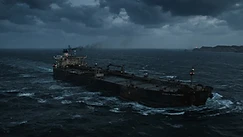
Strait Corridor Suppression Drags Commercial Transits Far Below Pre-War Baselines
Vessel transit figures through Hormuz remain deeply depressed, with tracking services recording single-digit crossings despite official claims of operational normalization.
Tehran Rejects Qatari Transit Initiatives as Regional Allied Navies Resist Unilateral Escort Commitments
Diplomatic sources confirm Iran has rebuffed Qatari mediation to ease Strait shipping controls, while key Asian allies push back on demands for independent naval deployments.
Seoul Weighed Deployment Options for Naval and Mine Clearance Units to Gulf Waters
South Korean defense authorities are reviewing formal options to dispatch maritime surveillance aircraft and mine countermeasures units to the Persian Gulf. Consultations with Washington and European partners reflect increasing pressure on import-reliant Asian states to safeguard Gulf shipping routes.