US Central Command Conducts Precision Wave Against IRGC Maritime Facilities
U.S. forces have conducted a new series of targeted strikes against Islamic Revolutionary Guard Corps infrastructure following renewed hostile action in the Strait of Hormuz.

Your ad here — 728×90 banner space
Direct Kinetic Retaliation Against Maritime Threats
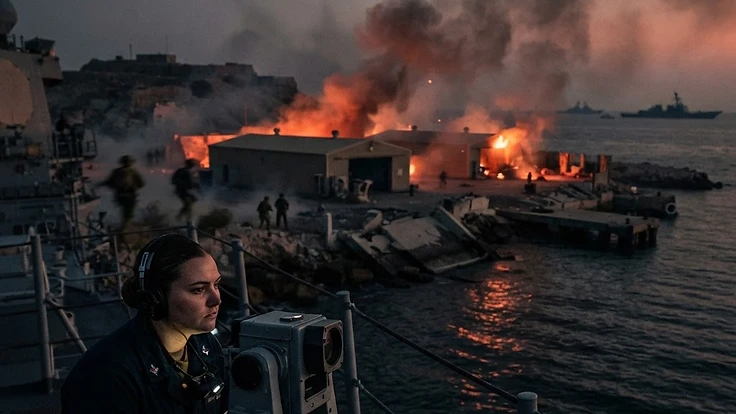
United States Central Command (CENTCOM) confirmed a series of coordinated air and naval strikes targeting Islamic Revolutionary Guard Corps (IRGC) operating positions adjacent to the Strait of Hormuz, according to reports documented by AP News and The New York Times.
The strikes represent the latest sharp uptick in direct military friction between Washington and Tehran, following weeks of intermittent tactical pauses. Military officials confirmed that strike packages focused on neutralizing coastal launch positions, radar nodes, and fast-attack logistics sites used by the IRGC Navy to harass commercial tankers transiting the narrow shipping lane.
"These operations were executed to protect commercial freedom of navigation and safeguard coalition assets after documented hostile engagement by Iranian units," CENTCOM noted in a public briefing. Iranian state outlets acknowledged multiple detonations along the southern coastline, confirming casualties among local IRGC garrisons while warning of immediate asymmetrical responses.
Escalation Dynamics and Regional Posture
The operation follows strikes near Larak Island and coastal sectors adjacent to Bandar Abbas, as detailed in recent reporting by Reuters. In response to previous American strikes, Iranian batteries fired ballistic salvos toward forward coalition operating locations in Jordan, signaling Tehran's readiness to sustain high-tempo reciprocal action across regional theaters.
President Donald Trump emphasized that American units remain at full alert and prepared to conduct follow-on operations at any time if Tehran continues its interference with international transit channels, according to Fox News. Regional observers note that the repeated exchanges across the Persian Gulf and Gulf of Oman have broken the relative lull established late in the summer, putting frontline air defense units across Gulf Cooperation Council (GCC) partner nations into heightened states of operational readiness.
With both sides trading kinetic strikes across critical chokepoints, the margin for diplomatic off-ramps remains exceptionally narrow. Commercial mariners operating under coalition advisories have been urged to maintain stand-off distances from active tactical sectors.
Related Intel

Tehran Outlines Formal Exclusion Zone Around Hormuz to Counter US Blockade
Iranian security officials have announced imminent plans to implement an operational maritime exclusion zone stretching from the U.S. naval blockade perimeter directly across the Strait of Hormuz.

US Neutralizes IRGC Tankers off Kharg Island as Diplomatic Narrative Fractures
U.S. Central Command disabled three Iranian crude carriers over the weekend following IRGC missile launches against American warships, escalating the maritime conflict into its seventh month.

CENTCOM Destroys Iranian Tankers and Coastal Launch Sites as Tehran Claims Drone Intercepts
U.S. Central Command struck three Iranian oil tankers and pre-positioned coastal minelaying missile platforms, while Tehran claimed to strike an unmanned American naval vessel in contested Hormuz waters.