Trump Administration Signals Imminent Hormuz Accord Amid Decapitation Warnings
US Treasury Secretary Scott Bessent suggests a breakthrough in the Strait of Hormuz blockade is possible within 24 hours, even as President Trump maintains a high-pressure rhetorical stance.

Your ad here — 728×90 banner space
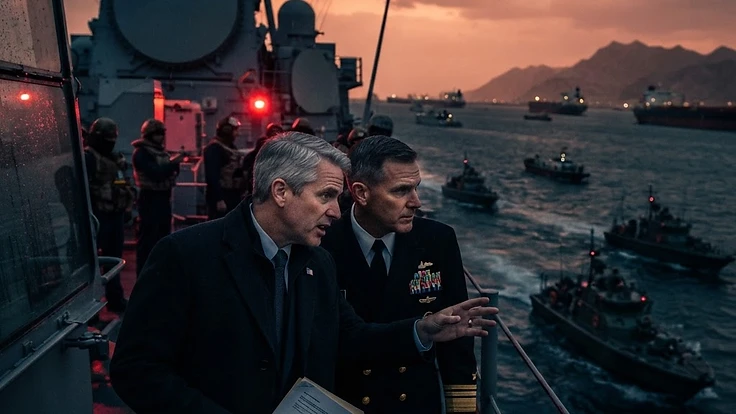
The Trump administration has signaled that a diplomatic resolution to the months-long blockade of the Strait of Hormuz may be reached as early as this weekend. Speaking to CNBC on Friday, August 7, 2026, US Treasury Secretary Scott Bessent indicated that 'there is a chance we may have a deal' in the coming hours, echoing a sentiment of cautious optimism that has permeated Washington following weeks of indirect negotiations. This potential breakthrough comes as the conflict, which began on February 28, 2026, reaches a critical juncture. President Donald Trump, speaking from the White House, maintained his signature 'maximum pressure' rhetoric, warning Tehran that the current diplomatic window represents Iran's 'last chance before decapitation.' This dual-track approach of offering a diplomatic exit while threatening total military escalation has become the hallmark of the administration's strategy in the Persian Gulf. France 24. The proposed agreement, mediated largely by Qatar and Oman, aims to restore the flow of commercial and energy-linked vessels through the world's most vital maritime chokepoint. While the specific terms remain under wraps, senior officials suggest the deal involves a phased lifting of the US naval blockade in exchange for verifiable Iranian guarantees regarding maritime security and a halt to attacks on commercial shipping. Qatari Emir Sheikh Tamim bin Hamad Al-Thani reportedly held a high-level phone call with President Trump on Tuesday to finalize de-escalation frameworks. However, the path to peace remains fraught with obstacles. Analysts at the Associated Press note that any durable deal may require significant compromises regarding US munitions stockpiles and Iranian nuclear ambitions, which Trump has insisted must be addressed. AP News. As of Saturday morning, August 8, no formal signing has been announced, but the diplomatic machinery in Doha and Muscat is operating at peak capacity. The 'Mecca Joint Defence Pact,' signed recently by regional powers, has added a new layer of complexity, as Middle Eastern nations seek to insulate themselves from the direct fallout of the US-Iran hostilities. Al Jazeera. For global energy markets and shipping conglomerates, the next 24 hours are viewed as the most significant diplomatic window since the war's inception.
Related Intel

Tehran Outlines Formal Exclusion Zone Around Hormuz to Counter US Blockade
Iranian security officials have announced imminent plans to implement an operational maritime exclusion zone stretching from the U.S. naval blockade perimeter directly across the Strait of Hormuz.

US Neutralizes IRGC Tankers off Kharg Island as Diplomatic Narrative Fractures
U.S. Central Command disabled three Iranian crude carriers over the weekend following IRGC missile launches against American warships, escalating the maritime conflict into its seventh month.

CENTCOM Destroys Iranian Tankers and Coastal Launch Sites as Tehran Claims Drone Intercepts
U.S. Central Command struck three Iranian oil tankers and pre-positioned coastal minelaying missile platforms, while Tehran claimed to strike an unmanned American naval vessel in contested Hormuz waters.