Tehran Accelerates Centrifuge Deployment Following IAEA Censure
Iran is reportedly installing additional advanced centrifuge cascades at its Fordow and Natanz facilities in response to a formal censure by the IAEA.
Your ad here — 728×90 banner space
Tensions between Tehran and Western powers have intensified this week following reports that Iran is expanding its uranium enrichment capacity. According to diplomatic sources and internal reports from the International Atomic Energy Agency (IAEA), Iran has begun installing additional cascades of advanced IR-6 centrifuges at its underground Fordow enrichment plant and is preparing for further expansion at the Natanz site. This move is widely viewed as a direct retaliation against a resolution passed by the IAEA Board of Governors last week, which formally censured Iran for its lack of cooperation with nuclear inspectors. The censure, spearheaded by the 'E3' (France, Germany, and the UK) and supported by the United States, demanded that Iran provide technically credible explanations for the presence of uranium particles at undeclared sites. Instead of compliance, Tehran has opted for technical escalation. Enrichment at Fordow is particularly sensitive, as the facility is built deep into a mountain to protect it from aerial strikes, and the IR-6 centrifuges are significantly more efficient than the first-generation IR-1 models. While Iran maintains that its nuclear program is entirely peaceful, the IAEA has warned that Tehran now possesses enough highly enriched uranium (up to 60% purity) to produce several nuclear warheads if it chose to enrich further to 90% 'weapons grade.' The U.S. State Department responded to the latest developments by stating that Iran must 'cease its escalation' and return to the terms of the Non-Proliferation Treaty (NPT). However, with the 2024 U.S. election approaching and Iran in a period of political transition following the death of President Ebrahim Raisi, the window for diplomatic resolution appears to be closing. Regional stakeholders, particularly Israel and Saudi Arabia, are monitoring the situation with high levels of concern. The expansion of enrichment capacity at Fordow reduces the 'breakout time'—the period required to produce enough fissile material for a weapon—to a matter of days or weeks. This technical advancement, combined with Iran's increased ballistic missile capabilities, continues to shift the balance of power in the Persian Gulf. As Tehran uses its nuclear leverage to push for sanctions relief, the risk of a miscalculation leading to direct conflict remains at its highest point in years.
Related Intel
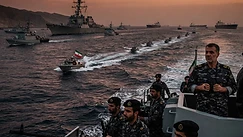
Tehran Outlines Formal Exclusion Zone Around Hormuz to Counter US Blockade
Iranian security officials have announced imminent plans to implement an operational maritime exclusion zone stretching from the U.S. naval blockade perimeter directly across the Strait of Hormuz.
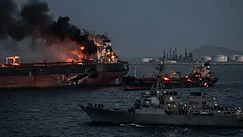
US Neutralizes IRGC Tankers off Kharg Island as Diplomatic Narrative Fractures
U.S. Central Command disabled three Iranian crude carriers over the weekend following IRGC missile launches against American warships, escalating the maritime conflict into its seventh month.
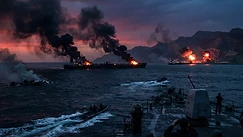
CENTCOM Destroys Iranian Tankers and Coastal Launch Sites as Tehran Claims Drone Intercepts
U.S. Central Command struck three Iranian oil tankers and pre-positioned coastal minelaying missile platforms, while Tehran claimed to strike an unmanned American naval vessel in contested Hormuz waters.