Strategic Reinforcement: US Deploys Stealth Assets to Bolster Central Command Defenses
The Pentagon has confirmed the arrival of F-22 Raptor squadrons in the Middle East to deter Iranian aggression and provide air cover for regional allies.
Your ad here — 728×90 banner space
In a significant escalation of its regional defensive posture, the United States Department of Defense has confirmed the deployment of F-22 Raptor stealth fighters to the U.S. Central Command (CENTCOM) area of responsibility. This deployment is part of a broader force posture adjustment ordered by Secretary of Defense Lloyd Austin, which includes the movement of the USS Abraham Lincoln Carrier Strike Group to replace the USS Theodore Roosevelt. The arrival of the F-22s, known for their advanced air-to-air capabilities and low observability, is intended to serve as a potent deterrent against potential aerial incursions or missile barrages directed at U.S. assets or regional allies. General Michael 'Erik' Kurilla, commander of CENTCOM, has been engaged in a flurry of diplomatic and military consultations across the region, including stops in Israel and Jordan, to coordinate a multilateral defense strategy. The Pentagon emphasized that these movements are 'defensive in nature' but designed to 'protect U.S. forces and support the defense of Israel.' The F-22s provide a unique capability to intercept drones and cruise missiles that might be launched from Iranian territory or by proxy groups in Iraq and Syria. Furthermore, the USS Georgia, a guided-missile submarine (SSGN) carrying over 150 Tomahawk missiles, has been ordered to remain in the region, providing a massive conventional strike capability if needed. The U.S. intelligence community has been tracking Iranian preparations for several days, noting that the 'window of vulnerability' for a strike is currently open. The deployment of stealth assets is also a message to the Iranian leadership about the technological gap and the potential costs of a direct confrontation. While the U.S. is reinforcing its military presence, the State Department continues to lead a diplomatic push to de-escalate. Secretary of State Antony Blinken has held multiple calls with regional counterparts, urging them to pass messages to Tehran that an attack would only worsen the economic and security situation for all parties involved. This 'dual-track' approach—massive military reinforcement combined with intense diplomacy—aims to prevent the current crisis from spiraling into a regional war that could disrupt global energy supplies and maritime trade through the Bab al-Mandeb and the Strait of Hormuz.
Related Intel
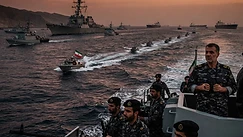
Tehran Outlines Formal Exclusion Zone Around Hormuz to Counter US Blockade
Iranian security officials have announced imminent plans to implement an operational maritime exclusion zone stretching from the U.S. naval blockade perimeter directly across the Strait of Hormuz.
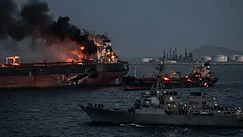
US Neutralizes IRGC Tankers off Kharg Island as Diplomatic Narrative Fractures
U.S. Central Command disabled three Iranian crude carriers over the weekend following IRGC missile launches against American warships, escalating the maritime conflict into its seventh month.
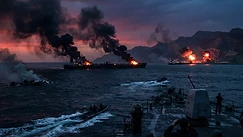
CENTCOM Destroys Iranian Tankers and Coastal Launch Sites as Tehran Claims Drone Intercepts
U.S. Central Command struck three Iranian oil tankers and pre-positioned coastal minelaying missile platforms, while Tehran claimed to strike an unmanned American naval vessel in contested Hormuz waters.