Maritime Security Alert: Sounion Tanker Fire Threatens Red Sea Ecology
The Greek-flagged tanker MV Sounion is currently adrift and burning in the Red Sea following Houthi attacks, posing a catastrophic environmental risk.
Your ad here — 728×90 banner space
Maritime security agencies are warning of a potential ecological disaster in the Red Sea as the Greek-flagged oil tanker MV Sounion continues to burn after being targeted by Houthi rebels last week. The vessel, carrying approximately 150,000 tonnes of Iraqi crude oil (roughly 1 million barrels), was abandoned by its crew after multiple projectiles caused a fire and loss of engine power. The EU’s Red Sea naval mission, Aspides, reported on Monday that several fires are still visible on the main deck, though there are currently no signs of a major oil spill.\n\nThe situation represents a critical threat to the maritime corridor leading to the Suez Canal. The Houthis, who claim to act in solidarity with Palestinians in Gaza, have intensified their campaign against commercial shipping, but the targeting of a laden oil tanker marks a dangerous shift toward environmental warfare. Experts warn that if the Sounion’s hull is breached, the resulting spill could be four times larger than the Exxon Valdez disaster, devastating the Red Sea’s unique coral reefs and desalinization plants that provide water to millions in the region. Salvage operations are currently being hampered by the ongoing security threat. Any attempt to tow the vessel requires a localized ceasefire, which has yet to be negotiated. The U.S. State Department has condemned the Houthi actions, stating that the group is 'willing to destroy the regional ecosystem for their political ends.'\n\nShipping companies are now facing increased pressure to avoid the Bab el-Mandeb strait entirely, leading to longer transit times around the Cape of Good Hope. For intelligence analysts at the Hormuz Sentinel, the Sounion incident serves as a grim template for what could occur in the Strait of Hormuz. Iran has historically used the threat of maritime blockades and environmental 'accidents' as a tool of leverage. The inability of international naval forces to secure a burning tanker in a high-threat zone highlights the limitations of current maritime security protocols. Shipping operators are advised to maintain strict 'Dark Mode' (AIS off) protocols in high-risk zones and coordinate closely with naval task forces like Operation Prosperity Guardian. The potential for a spill of this magnitude to disrupt regional shipping for months cannot be overstated, as cleanup operations would be nearly impossible in an active combat zone.
Related Intel
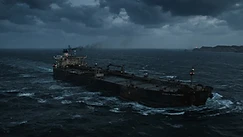
Strait Commodity Transits Plunge to Fresh Baselines Following Tit-for-Tat Tanker Strikes
Commercial traffic through the Strait of Hormuz has plummeted to an average of just 10 commodity vessels per day following mutual military attacks on commercial and state-linked tankers.
Strait Corridor Suppression Drags Commercial Transits Far Below Pre-War Baselines
Vessel transit figures through Hormuz remain deeply depressed, with tracking services recording single-digit crossings despite official claims of operational normalization.
Tehran Rejects Qatari Transit Initiatives as Regional Allied Navies Resist Unilateral Escort Commitments
Diplomatic sources confirm Iran has rebuffed Qatari mediation to ease Strait shipping controls, while key Asian allies push back on demands for independent naval deployments.