Satellite Data Reveals Shadow Transfers as Strait Traffic Hits Three-Week Low
New intelligence indicates that shipping companies are resorting to ship-to-ship transfers outside the Strait of Hormuz to bypass the ongoing naval blockade.
Your ad here — 728×90 banner space
As the U.S.-led naval blockade of Iran continues, commercial shipping activity in the Strait of Hormuz has plummeted to a three-week low. Data provided by the U.S. Navy indicates that 17 commercial ships were redirected in the last 48 hours, with two vessels disabled and two others boarded by military personnel. In response to these restrictions, energy exporters have adopted increasingly covert tactics to move crude oil. Satellite imagery analyzed by Bloomberg shows a dozen tankers conducting ship-to-ship (STS) transfers in the waters outside the Strait, particularly near the UAE port of Fujairah. These 'shuttle transits' involve smaller vessels moving oil from within the Gulf to larger tankers waiting in the Gulf of Oman, effectively bypassing the most heavily patrolled areas of the Strait. While this method allows some oil to reach global markets, it is significantly more expensive and time-consuming than traditional transit. The U.S. Treasury has responded by targeting the 'shadow fleet' facilitators that enable these transfers, yet the practice persists as a vital lifeline for regional exporters. The tactical situation remains tense; although no new attacks have been confirmed in the past 72 hours, the IRGC maintains a significant presence of drones, mines, and small seacraft capable of disrupting traffic at a moment's notice. The U.S. military has maintained its 11th night of strikes on Iranian-linked targets to degrade these capabilities, but the 'war of nerves' continues. For shipping giants, the risk remains too high for standard operations, leading to the current historic low in vessel crossings. The reliance on STS transfers highlights the desperation of the market and the limitations of military blockades in completely halting the flow of energy commodities.
Related Intel

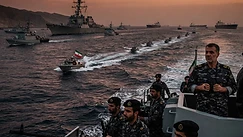
Tehran Outlines Formal Exclusion Zone Around Hormuz to Counter US Blockade
Iranian security officials have announced imminent plans to implement an operational maritime exclusion zone stretching from the U.S. naval blockade perimeter directly across the Strait of Hormuz.

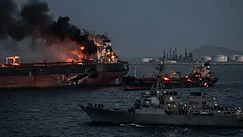
US Neutralizes IRGC Tankers off Kharg Island as Diplomatic Narrative Fractures
U.S. Central Command disabled three Iranian crude carriers over the weekend following IRGC missile launches against American warships, escalating the maritime conflict into its seventh month.

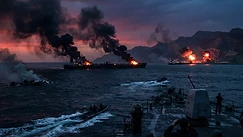
CENTCOM Destroys Iranian Tankers and Coastal Launch Sites as Tehran Claims Drone Intercepts
U.S. Central Command struck three Iranian oil tankers and pre-positioned coastal minelaying missile platforms, while Tehran claimed to strike an unmanned American naval vessel in contested Hormuz waters.