Regional Hubs Brace for Impact as Iran Targets US Military Installations in Kuwait and Bahrain
Security protocols have been heightened across the Persian Gulf following Iranian missile strikes on US-linked facilities in Bahrain and Kuwait.
Your ad here — 728×90 banner space
The military dimension of the U.S.-Iran conflict has escalated sharply over the past 48 hours, with U.S. Central Command (CENTCOM) conducting extensive strikes against Iranian military infrastructure. Following an initial operation that targeted 80 sites, U.S. forces launched a second round of strikes hitting approximately 90 additional targets overnight. These operations were designed to degrade Tehran's ability to threaten commercial shipping and launch drone attacks against maritime traffic in the Strait of Hormuz. The targets included coastal facilities, drone launch sites, and command-and-control centers used by the Islamic Revolutionary Guard Corps (IRGC). In retaliation, Iran launched a series of ballistic missile and drone attacks against U.S. military bases in Bahrain, Kuwait, and Qatar. While U.S. officials have not confirmed the extent of the damage, Iranian state media claimed successful hits on 'enemy installations.' The regional impact of this exchange was felt as far as Jordan, where military officials confirmed the interception of eight Iranian missiles transiting their airspace. The escalation has prompted a massive increase in security readiness across the Gulf Cooperation Council (GCC) states. In Kuwait and Bahrain, sirens were reported as air defense systems were activated to counter incoming threats. This renewed military action follows the collapse of a tentative ceasefire, with the U.S. administration warning that further strikes are likely if Iranian threats to the Strait of Hormuz persist. The IRGC has vowed an 'immediate response' to any further U.S. involvement in shipping operations, creating a cycle of escalation that has effectively closed the southern Omani shipping lane. For commercial operators and regional governments, the focus has shifted to emergency preparedness and the hardening of critical infrastructure. The U.S. has also targeted financial networks supporting Houthi weaponry, as the group continues to launch its own strikes in the Red Sea, further complicating the regional security picture. As the conflict enters this more aggressive phase, the risk to land-based energy infrastructure in neighboring countries has become a primary concern for global markets. Security analysts warn that the 'tit-for-tat' nature of the current strikes could easily broaden into a wider regional conflagration if a major civilian or energy target is struck.
Related Intel
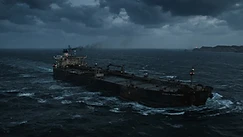
Strait Commodity Transits Plunge to Fresh Baselines Following Tit-for-Tat Tanker Strikes
Commercial traffic through the Strait of Hormuz has plummeted to an average of just 10 commodity vessels per day following mutual military attacks on commercial and state-linked tankers.
Strait Corridor Suppression Drags Commercial Transits Far Below Pre-War Baselines
Vessel transit figures through Hormuz remain deeply depressed, with tracking services recording single-digit crossings despite official claims of operational normalization.
Tehran Rejects Qatari Transit Initiatives as Regional Allied Navies Resist Unilateral Escort Commitments
Diplomatic sources confirm Iran has rebuffed Qatari mediation to ease Strait shipping controls, while key Asian allies push back on demands for independent naval deployments.