Red Sea Security Update: Maritime Risks Persist Amid Sustained Houthi Aerial Campaigns
Tactical analysis of recent CENTCOM interceptions reveals a continuing high-threat environment for commercial shipping in the Gulf of Aden.
Your ad here — 728×90 banner space
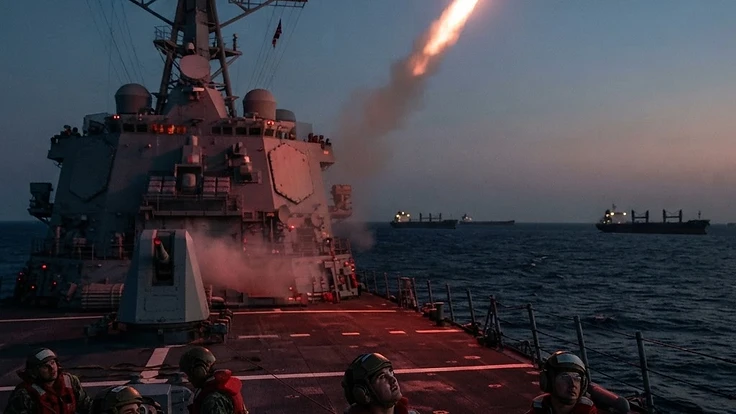
Maritime security in the Red Sea and Gulf of Aden remains in a state of high alert as Houthi militants continue to deploy unmanned aerial vehicles (UAVs) and anti-ship ballistic missiles against commercial and naval vessels. U.S. Central Command (CENTCOM) confirmed the destruction of multiple Houthi assets over the last 24 hours, including two UAVs over the Red Sea and a surface-to-air missile system located in a Houthi-controlled area of Yemen.
The persistent nature of these attacks has fundamentally altered the economics of global shipping. Major carriers continue to divert vessels around the Cape of Good Hope, adding approximately 10 to 14 days to transit times between Asia and Northern Europe. According to recent maritime data, the volume of container ships passing through the Suez Canal has dropped by nearly 70% compared to the previous year. This diversion has led to a sustained increase in bunker fuel consumption and higher freight rates, which are being passed on to consumers as inflationary pressure.
From a tactical perspective, the Houthis have demonstrated an evolving capability to use 'loitering munitions'—drones that can stay airborne for extended periods before striking a target. This necessitates constant vigilance from the coalition task forces, Operation Prosperity Guardian and the EU's Operation Aspides. While no merchant vessels were reported damaged in the most recent 24-hour window, the frequency of engagements suggests that the Houthi supply of Iranian-made components remains robust despite international efforts to interdict the flow of weapons.
For shipping companies and energy exporters, the risk assessment remains unchanged: the Southern Red Sea is a 'High Threat' zone. Insurance premiums for transit through the Bab al-Mandab Strait remain at elevated levels, often exceeding 1% of the total value of the vessel per transit. Operators are advised to maintain rigorous Electronic Countermeasures (ECM) and coordinate closely with UKMTO (United Kingdom Maritime Trade Operations) when transiting the region. The Sentinel Desk monitors these developments for any signs of the Houthis deploying more advanced underwater drones (UUVs), which would represent a significant escalation in the maritime threat profile.
Related Intel

Strait Commodity Transits Plunge to Fresh Baselines Following Tit-for-Tat Tanker Strikes
Commercial traffic through the Strait of Hormuz has plummeted to an average of just 10 commodity vessels per day following mutual military attacks on commercial and state-linked tankers.
Strait Corridor Suppression Drags Commercial Transits Far Below Pre-War Baselines
Vessel transit figures through Hormuz remain deeply depressed, with tracking services recording single-digit crossings despite official claims of operational normalization.
Tehran Rejects Qatari Transit Initiatives as Regional Allied Navies Resist Unilateral Escort Commitments
Diplomatic sources confirm Iran has rebuffed Qatari mediation to ease Strait shipping controls, while key Asian allies push back on demands for independent naval deployments.