Pentagon Bolsters Maritime Presence with 12 Warships Deployed to Middle East
The U.S. Navy has strategically positioned over a dozen vessels, including the USS Theodore Roosevelt, to deter Iranian retaliation and protect commercial lanes.

Your ad here — 728×90 banner space
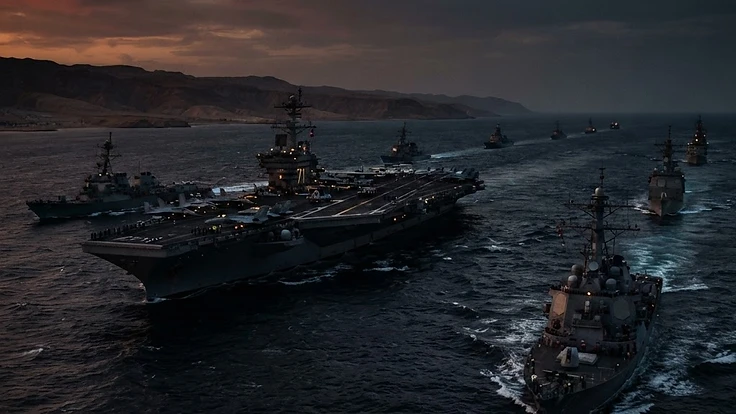
In one of the most significant surges of American naval power in recent years, the Pentagon has confirmed the presence of 12 warships in the Middle East and Eastern Mediterranean. This deployment is designed to provide a multi-layered defense for Israel and maintain freedom of navigation in the Bab el-Mandeb and the Strait of Hormuz. Central to this posture is the USS Theodore Roosevelt (CVN-71) Carrier Strike Group, which is currently operating in the Gulf of Oman, and the USS Abraham Lincoln (CVN-72), which is accelerating its transit from the Pacific to the CENTCOM area of responsibility. The fleet includes several Arleigh Burke-class destroyers equipped with the Aegis Combat System, capable of intercepting ballistic missiles—a capability that proved crucial during Iran’s April 13 attack on Israel. Additionally, the Wasp Amphibious Ready Group (ARG), carrying the 24th Marine Expeditionary Unit, is stationed in the Eastern Mediterranean. This force provides the U.S. with a 'quick response' capability for non-combatant evacuation operations (NEO) should the security situation in Lebanon deteriorate further. From an intelligence standpoint, the concentration of naval assets serves as a 'loud' deterrent. By making these movements public, the U.S. is signaling to Tehran that any attack involving cruise or ballistic missiles will face a high probability of interception. For shipping operators, this presence offers a modicum of reassurance, yet insurance premiums remain at record highs. The Hormuz Sentinel Desk notes that while the U.S. Navy is focused on the 'high-end' threat from Iran, Houthi rebels in Yemen remain active, having launched several drone attacks against commercial vessels in the last 48 hours, illustrating the persistent risk of a multi-front maritime conflict.
Related Intel
Strait Commodity Transits Plunge to Fresh Baselines Following Tit-for-Tat Tanker Strikes
Commercial traffic through the Strait of Hormuz has plummeted to an average of just 10 commodity vessels per day following mutual military attacks on commercial and state-linked tankers.
Strait Corridor Suppression Drags Commercial Transits Far Below Pre-War Baselines
Vessel transit figures through Hormuz remain deeply depressed, with tracking services recording single-digit crossings despite official claims of operational normalization.
Tehran Rejects Qatari Transit Initiatives as Regional Allied Navies Resist Unilateral Escort Commitments
Diplomatic sources confirm Iran has rebuffed Qatari mediation to ease Strait shipping controls, while key Asian allies push back on demands for independent naval deployments.