Netanyahu Outlines 'Axis of Evil' Doctrine in Landmark Congressional Address
Prime Minister Benjamin Netanyahu's address to the US Congress focused heavily on the existential threat posed by Iran and its regional proxies.
Your ad here — 728×90 banner space
On July 24, 2024, Israeli Prime Minister Benjamin Netanyahu delivered a high-stakes address to a joint session of the U.S. Congress, framing the ongoing conflict in the Middle East as a fundamental clash between civilization and barbarism. Central to his rhetoric was the 'Axis of Evil,' a term he used to describe the network of Iranian-backed proxies including Hamas, Hezbollah, and the Houthis. Netanyahu emphasized that Israel's fight is effectively America's fight, arguing that Tehran views Israel as merely the 'small Satan' while the United States remains the 'great Satan.' The Prime Minister called for a 'total victory' and urged the U.S. to accelerate military aid to ensure a swift end to the conflict in Gaza, which he characterized as the front line of a broader Iranian offensive.
Throughout the 52-minute speech, Netanyahu provided specific intelligence-inflected warnings regarding Iran's regional ambitions. He claimed that Tehran is actively funding and promoting anti-Israel protests within the United States to destabilize Western resolve. This assertion comes amid heightened domestic political tension in the U.S., with approximately 50 Democratic lawmakers boycotting the session. Despite the political divisions in the chamber, Netanyahu’s message was a clear strategic signal to the Islamic Republic: the U.S.-Israel defense partnership remains the primary bulwark against Iranian hegemony in the Levant. From a tactical perspective, the speech serves as a precursor to Netanyahu's upcoming meetings with President Biden and Vice President Harris, where the specifics of a ceasefire-for-hostages deal and the 'day after' governance in Gaza will be scrutinized. Intelligence observers note that Netanyahu’s hardline stance on Iran suggests that any potential de-escalation in the Red Sea or on the Lebanese border remains contingent on a significant shift in Tehran's strategic calculus, which currently shows no signs of moderating.
Related Intel
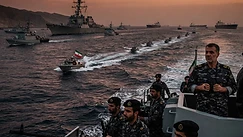
Tehran Outlines Formal Exclusion Zone Around Hormuz to Counter US Blockade
Iranian security officials have announced imminent plans to implement an operational maritime exclusion zone stretching from the U.S. naval blockade perimeter directly across the Strait of Hormuz.
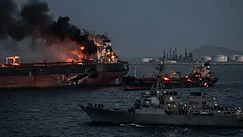
US Neutralizes IRGC Tankers off Kharg Island as Diplomatic Narrative Fractures
U.S. Central Command disabled three Iranian crude carriers over the weekend following IRGC missile launches against American warships, escalating the maritime conflict into its seventh month.
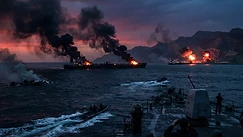
CENTCOM Destroys Iranian Tankers and Coastal Launch Sites as Tehran Claims Drone Intercepts
U.S. Central Command struck three Iranian oil tankers and pre-positioned coastal minelaying missile platforms, while Tehran claimed to strike an unmanned American naval vessel in contested Hormuz waters.