Moscow’s Intercession: Shoigu Lands in Tehran Amid Heightened Retaliation Posture
Russian Security Council Secretary Sergei Shoigu arrived in Tehran for high-level meetings as the Kremlin attempts to balance its strategic partnership with Iran against regional stability.
Your ad here — 728×90 banner space
In a high-stakes diplomatic maneuver, Sergei Shoigu, the Secretary of Russia’s Security Council and former Defense Minister, arrived in Tehran on Monday for consultations with senior Iranian leadership. The visit occurs at a precarious juncture as the Islamic Republic signals its intent to retaliate against Israel following the assassination of Hamas political leader Ismail Haniyeh on Iranian soil. Shoigu held extensive talks with Ali Akbar Ahmadian, the secretary of Iran’s Supreme National Security Council, and Chief of Staff of the Iranian Armed Forces, Major General Mohammad Bagheri. Later, he was received by President Masoud Pezeshkian.
According to Iranian state media (IRNA), Pezeshkian emphasized that Russia is a 'strategic partner' and that the expansion of ties between the two nations is a fundamental pillar of Iranian foreign policy. However, the underlying subtext of the visit involves Moscow’s concerns regarding a full-scale regional conflagration. While Russia has deepened its military cooperation with Iran since the invasion of Ukraine—reportedly receiving Shahed-series loitering munitions and ballistic missile technology—a major Middle Eastern war could disrupt Russian interests in Syria and strain its logistical pipelines. Sources familiar with the discussions suggest Shoigu carried a message from President Vladimir Putin urging restraint, specifically advising against strikes that target Israeli civilian infrastructure, which could trigger a disproportionate and uncontrollable escalation.
General Bagheri noted during the meetings that the relationship between Tehran and Moscow is 'deep, strategic, and long-term,' and would not be disrupted by changes in administration. Military analysts suggest that Shoigu’s visit may also facilitate the expedited delivery of Russian electronic warfare and air defense hardware, including components for the S-400 Triumf system, which Iran has long sought to harden its airspace against potential Israeli or U.S. incursions.
The presence of Russia’s top security official in Tehran underscores the shifting architecture of regional alliances. As the United States surges naval and aerial assets to the Eastern Mediterranean and the Persian Gulf to defend Israel, Iran is visibly leaning into its 'Eurasian pivot.' For Washington, the Shoigu visit represents a complicating factor in the 'deterrence by diplomacy' track. If Moscow is seen as validating Iran’s right to respond while providing tactical hardware, the window for a negotiated de-escalation narrows significantly. The Hormuz Sentinel Desk notes that Shoigu’s arrival likely signals that the 'calibration' phase of Iran's response is nearing completion, with Moscow seeking to ensure the fallout remains manageable within the current geopolitical framework.
Related Intel
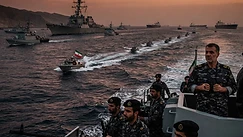
Tehran Outlines Formal Exclusion Zone Around Hormuz to Counter US Blockade
Iranian security officials have announced imminent plans to implement an operational maritime exclusion zone stretching from the U.S. naval blockade perimeter directly across the Strait of Hormuz.
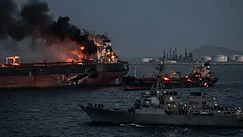
US Neutralizes IRGC Tankers off Kharg Island as Diplomatic Narrative Fractures
U.S. Central Command disabled three Iranian crude carriers over the weekend following IRGC missile launches against American warships, escalating the maritime conflict into its seventh month.
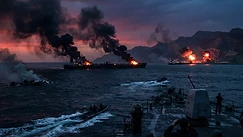
CENTCOM Destroys Iranian Tankers and Coastal Launch Sites as Tehran Claims Drone Intercepts
U.S. Central Command struck three Iranian oil tankers and pre-positioned coastal minelaying missile platforms, while Tehran claimed to strike an unmanned American naval vessel in contested Hormuz waters.