Maritime Security Advisories Tighten as Houthi Drone Activity Persists in Southern Red Sea
The United Kingdom Maritime Trade Operations and US CENTCOM report a series of attempted drone strikes and suspicious approaches targeting commercial vessels near the Bab el-Mandeb Strait.
Your ad here — 728×90 banner space
The maritime security landscape in the Southern Red Sea and the Gulf of Aden has deteriorated further over the past 24 hours, prompting new advisories for commercial shipping operators. The United Kingdom Maritime Trade Operations (UKMTO) reported an incident approximately 170 nautical miles southeast of Aden, where a commercial vessel reported an explosion in close proximity. While the vessel and crew were reported safe, the event underscores the persistent threat posed by Houthi militants operating from Yemen. US Central Command (CENTCOM) confirmed that its forces successfully destroyed one Houthi uncrewed aerial vehicle (UAV) and one uncrewed surface vessel (USV) in Houthi-controlled areas of Yemen within the last day. These assets were determined to present an imminent threat to US and coalition forces, as well as merchant vessels in the region. The Houthis, who claim to be acting in solidarity with Palestinians in Gaza, have significantly expanded their target profile, now employing more sophisticated loitering munitions and anti-ship ballistic missiles. Security firms such as Ambrey and Dryad Global have advised vessels to maintain strict radio silence and disable AIS (Automatic Identification System) transponders when transiting high-risk zones, although this tactic is becoming less effective against the Houthis' shore-based radar and reconnaissance drones. The recent attack on the MV Groton, a Liberian-flagged container ship, has led to a re-evaluation of the 'safe zones' within the Gulf of Aden. Shipping giants including Maersk and Hapag-Lloyd continue to divert the majority of their Asia-Europe voyages around the Cape of Good Hope, adding significant costs and delays to global trade. For the vessels that continue to transit the Suez Canal, insurance premiums have spiked, with some underwriters now demanding up to 1 percent of the vessel's hull value for a single passage. The US-led Operation Prosperity Guardian remains active, providing escort services for high-priority vessels, but the sheer volume of threats makes total protection difficult. Maritime analysts warn that a coordinated swarm attack, combining UAVs and USVs, remains the most likely scenario for a major disruption in the coming days. The focus remains on the Strait of Hormuz, where the Iranian Navy has increased its patrol frequency, leading to concerns about potential ship seizures in retaliation for the freezing of Iranian assets abroad. Shipping companies are urged to conduct thorough risk assessments and ensure that armed security teams are present for all transits through the Bab el-Mandeb and the Gulf of Aden.
Related Intel
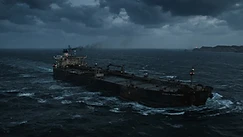
Strait Commodity Transits Plunge to Fresh Baselines Following Tit-for-Tat Tanker Strikes
Commercial traffic through the Strait of Hormuz has plummeted to an average of just 10 commodity vessels per day following mutual military attacks on commercial and state-linked tankers.
Strait Corridor Suppression Drags Commercial Transits Far Below Pre-War Baselines
Vessel transit figures through Hormuz remain deeply depressed, with tracking services recording single-digit crossings despite official claims of operational normalization.
Tehran Rejects Qatari Transit Initiatives as Regional Allied Navies Resist Unilateral Escort Commitments
Diplomatic sources confirm Iran has rebuffed Qatari mediation to ease Strait shipping controls, while key Asian allies push back on demands for independent naval deployments.