Maritime Confrontation: US Central Command Refutes Houthi Claims of Carrier Strike
US CENTCOM has dismissed Houthi claims of a successful strike on the USS Dwight D. Eisenhower as maritime hostilities in the Red Sea continue to escalate.

Your ad here — 728×90 banner space
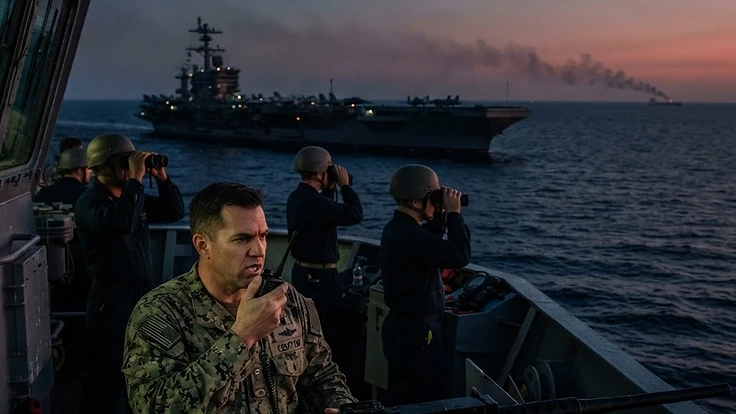
United States Central Command (CENTCOM) has issued a formal rebuttal to claims made by Houthi military spokesperson Yahya Saree regarding a successful missile attack on the Nimitz-class aircraft carrier USS Dwight D. Eisenhower (CVN 69). Houthi officials alleged that the strike was a direct response to US-UK joint aerial bombardments on Houthi-controlled infrastructure in Yemen, which reportedly resulted in 16 fatalities. However, US defense officials stated that no such strike occurred and that the carrier group remains fully operational without damage. The exchange highlights the intensifying psychological warfare accompanying the kinetic conflict in the Bab al-Mandab Strait. Over the past 48 hours, CENTCOM forces have intercepted and destroyed at least five unmanned aerial vehicles (UAVs) in the Southern Red Sea and two anti-ship ballistic missiles (ASBMs) launched from Houthi territory. The maritime environment remains extremely high-risk for commercial traffic. The bulk carrier 'Maina' and the tanker 'Aloraiq' were reportedly targeted in separate incidents, though no major damage was reported. Global shipping giants, including Maersk and Hapag-Lloyd, continue to divert the majority of their Asia-Europe voyages around the Cape of Good Hope, bypassing the Suez Canal entirely. This diversion adds approximately 10 to 14 days to transit times and increases fuel costs by nearly 40%. The Suez Canal Authority has reported a significant drop in monthly revenue, falling from $800 million to approximately $400 million compared to the previous year. As the US Navy maintains its 'Operation Prosperity Guardian' presence, the frequency of Houthi salvos suggests that the group's arsenal of Iranian-supplied components remains resilient despite months of coalition airstrikes. Commercial operators are advised to maintain maximum security protocols and utilize private maritime security teams when transiting the Gulf of Aden.
Related Intel

Strait Commodity Transits Plunge to Fresh Baselines Following Tit-for-Tat Tanker Strikes
Commercial traffic through the Strait of Hormuz has plummeted to an average of just 10 commodity vessels per day following mutual military attacks on commercial and state-linked tankers.
Strait Corridor Suppression Drags Commercial Transits Far Below Pre-War Baselines
Vessel transit figures through Hormuz remain deeply depressed, with tracking services recording single-digit crossings despite official claims of operational normalization.
Tehran Rejects Qatari Transit Initiatives as Regional Allied Navies Resist Unilateral Escort Commitments
Diplomatic sources confirm Iran has rebuffed Qatari mediation to ease Strait shipping controls, while key Asian allies push back on demands for independent naval deployments.