Centcom Neutralizes Larak Island Launchers as IRGC Retaliates Against Jordan Bases
U.S. forces conducted precision strikes on Iranian rocket launchers in the Strait of Hormuz, triggering a retaliatory missile barrage against American facilities in Jordan.

Your ad here — 728×90 banner space
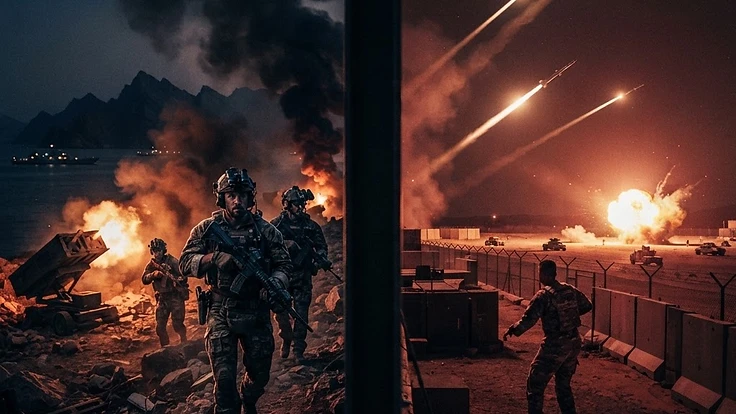
The fragile relative calm in the Persian Gulf evaporated late Sunday as U.S. Central Command (CENTCOM) launched its first direct strikes on Iranian territory since late July. According to Captain Tim Hawkins, a spokesperson for CENTCOM, U.S. forces targeted and destroyed two Iranian rocket launchers situated on Larak Island, a strategic landmass positioned deep within the Strait of Hormuz. The operation, which occurred at approximately 22:00 GMT, was described as a preemptive measure after intelligence observed the Islamic Revolutionary Guard Corps (IRGC) preparing to deploy sea mines into the primary shipping lanes. The U.S. military maintains that these launchers posed an imminent threat to the remaining commercial traffic attempting to navigate the waterway. Tehran responded with immediate force, launching a series of missile and drone strikes against two U.S. air bases located in Jordan. Iranian state media, citing IRGC officials, claimed the strikes were a direct response to the 'violation of Iranian sovereignty' at Larak Island. While the IRGC alleged significant casualties among U.S. personnel, CENTCOM officials have disputed these claims, stating that damage assessments are ongoing but initial reports indicate no American fatalities. This exchange marks a dangerous new phase in the six-month-old conflict, which has seen the Strait of Hormuz effectively shuttered to most international commerce. The escalation follows a period of 'uneasy ceasefire' during which mediators from Oman attempted to broker a transit fee agreement. Those talks now appear to be in total collapse as both nations return to active kinetic operations. The use of Larak Island as a staging ground for mining operations suggests that Tehran is doubling down on its strategy of 'controlled friction,' using the threat of total maritime closure to exert pressure on global energy markets. U.S. naval assets in the region, including the carrier strike groups currently stationed in the North Arabian Sea, have been placed on high alert. Analysts warn that if the cycle of strikes continues, the risk of a broader regional conflagration involving neighboring Gulf states like Kuwait and the UAE increases significantly. For now, the focus remains on the tactical environment within the Strait, where the U.S. continues its blockade of Iranian ports, having redirected or boarded over 80 vessels in the last month alone. The situation remains fluid, with both sides signaling a readiness to escalate further if their respective 'red lines' are crossed in the coming hours.
Related Intel

Tehran Outlines Formal Exclusion Zone Around Hormuz to Counter US Blockade
Iranian security officials have announced imminent plans to implement an operational maritime exclusion zone stretching from the U.S. naval blockade perimeter directly across the Strait of Hormuz.

US Neutralizes IRGC Tankers off Kharg Island as Diplomatic Narrative Fractures
U.S. Central Command disabled three Iranian crude carriers over the weekend following IRGC missile launches against American warships, escalating the maritime conflict into its seventh month.

CENTCOM Destroys Iranian Tankers and Coastal Launch Sites as Tehran Claims Drone Intercepts
U.S. Central Command struck three Iranian oil tankers and pre-positioned coastal minelaying missile platforms, while Tehran claimed to strike an unmanned American naval vessel in contested Hormuz waters.