Jordanian Foreign Minister Makes Rare Visit to Tehran Amid Regional Escalation
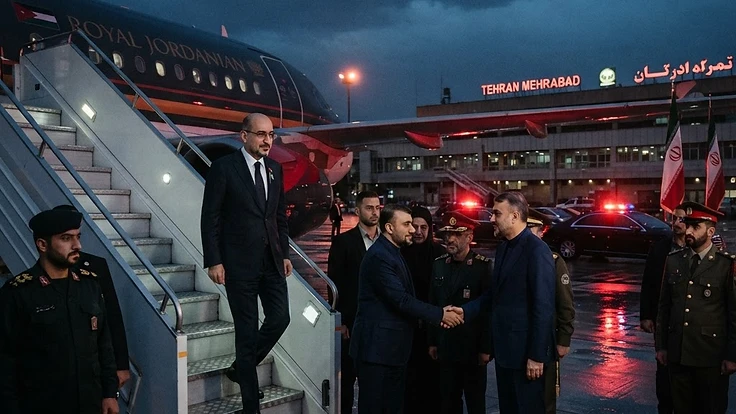
Jordanian Foreign Minister Ayman Safadi arrived in Tehran for an unprecedented diplomatic mission aimed at cooling tensions following the assassination of Ismail Haniyeh.

Your ad here — 728×90 banner space
In a significant diplomatic maneuver, Jordanian Foreign Minister Ayman Safadi traveled to Tehran on Sunday, marking the first visit of a high-ranking Jordanian official to the Iranian capital in over two decades. The visit comes at an extremely volatile juncture as Iran and its regional proxies weigh a response to the back-to-back assassinations of Hamas political leader Ismail Haniyeh in Tehran and Hezbollah commander Fuad Shukur in Beirut. Safadi's mission is reportedly centered on delivering a message from King Abdullah II regarding the necessity of regional stability and the prevention of an all-out war that would inevitably draw in neighboring states. During his meetings with Iran's acting Foreign Minister Ali Bagheri Kani, Safadi emphasized that Jordan would not permit its airspace to become a battlefield for any party, a reference to the April 13-14 Iranian missile and drone attack on Israel where Jordanian defenses intercepted several projectiles. Iranian officials, however, maintained their rhetoric regarding the right to self-defense. Bagheri Kani stated that the assassination of Haniyeh on Iranian soil was a 'strategic mistake' by Israel that would not go unanswered. The diplomatic outreach by Amman reflects a broader concern among Arab states that a miscalculation could trigger a regional conflagrian. While the United States continues to bolster its military presence in the region, it is also leaning heavily on regional partners like Jordan and Qatar to communicate the risks of escalation to Tehran. Safadi’s visit highlights the precarious position of Jordan, which maintains a peace treaty with Israel but also hosts a significant Palestinian population and faces internal pressure to take a harder line against Israeli military actions in Gaza. The outcome of these talks remains uncertain, as the Iranian leadership is under intense domestic and proxy pressure to restore deterrence through a visible military response. Intelligence analysts suggest that Safadi's presence in Tehran may be a final attempt to negotiate the 'scale' of an Iranian retaliation rather than preventing it entirely, seeking a middle ground that satisfies Tehran's need for optics without triggering a full-scale Israeli counter-offensive supported by U.S. assets.
Related Intel

Tehran Outlines Formal Exclusion Zone Around Hormuz to Counter US Blockade
Iranian security officials have announced imminent plans to implement an operational maritime exclusion zone stretching from the U.S. naval blockade perimeter directly across the Strait of Hormuz.

US Neutralizes IRGC Tankers off Kharg Island as Diplomatic Narrative Fractures
U.S. Central Command disabled three Iranian crude carriers over the weekend following IRGC missile launches against American warships, escalating the maritime conflict into its seventh month.

CENTCOM Destroys Iranian Tankers and Coastal Launch Sites as Tehran Claims Drone Intercepts
U.S. Central Command struck three Iranian oil tankers and pre-positioned coastal minelaying missile platforms, while Tehran claimed to strike an unmanned American naval vessel in contested Hormuz waters.