Strategic Authorization: Israel Cabinet Greenlights Response to Majdal Shams Attack
The Israeli security cabinet has authorized a military response following a deadly rocket strike in the Golan Heights, significantly increasing the risk of a broader regional conflict.

Your ad here — 728×90 banner space
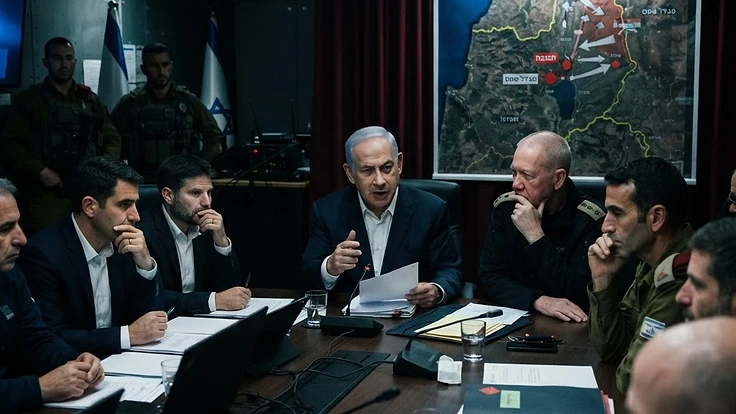
In a high-stakes meeting late Sunday, Israel's security cabinet formally authorized Prime Minister Benjamin Netanyahu and Defense Minister Yoav Gallant to determine the 'manner and timing' of a military response against Hezbollah. The decision follows a rocket strike on Saturday in the Druze town of Majdal Shams in the Israeli-occupied Golan Heights, which resulted in the deaths of 12 children and teenagers. While Hezbollah has issued a rare and firm denial of responsibility, both Israeli and U.S. intelligence have attributed the strike to a Falaq-1 rocket launched from southern Lebanon. The Israel Defense Forces (IDF) have spent the last 24 hours striking Hezbollah targets deep within Lebanese territory, including the Beqaa Valley, though these are viewed as preliminary actions ahead of a more significant operation. The Biden administration is reportedly engaged in intensive diplomatic efforts to prevent the situation from spiraling into an all-out war. U.S. officials have signaled support for Israel's right to defend itself while privately urging restraint to avoid targeting major civilian infrastructure or Beirut, which could trigger a massive retaliatory response from Tehran's primary proxy. In Lebanon, the government has called for an international investigation and a ceasefire, fearing that a miscalculation could lead to a total collapse of the fragile border stability maintained since 2006. Regional markets are closely watching the Golan Heights escalation, as any expansion of the conflict could directly impact the security of the Eastern Mediterranean and involve Iranian interests more overtly. For now, the IDF remains on high alert across the northern command, with additional battery deployments of the Iron Dome and David’s Sling interceptor systems.
Related Intel
Tehran Outlines Formal Exclusion Zone Around Hormuz to Counter US Blockade
Iranian security officials have announced imminent plans to implement an operational maritime exclusion zone stretching from the U.S. naval blockade perimeter directly across the Strait of Hormuz.
US Neutralizes IRGC Tankers off Kharg Island as Diplomatic Narrative Fractures
U.S. Central Command disabled three Iranian crude carriers over the weekend following IRGC missile launches against American warships, escalating the maritime conflict into its seventh month.
CENTCOM Destroys Iranian Tankers and Coastal Launch Sites as Tehran Claims Drone Intercepts
U.S. Central Command struck three Iranian oil tankers and pre-positioned coastal minelaying missile platforms, while Tehran claimed to strike an unmanned American naval vessel in contested Hormuz waters.