Beirut Targeting: IDF Eliminates Senior Hezbollah Commander Fuad Shukr
The Israeli Defense Forces confirmed the elimination of Fuad Shukr, Hezbollah's most senior military official, in a targeted airstrike in southern Beirut.
Your ad here — 728×90 banner space
Late Tuesday, an Israeli airstrike targeted a residential building in the Haret Hreik neighborhood of southern Beirut, the stronghold of Hezbollah. The Israeli Defense Forces (IDF) later confirmed that the target was Fuad Shukr, also known as al-Hajj Mohsin, described as the 'right-hand man' to Hezbollah Secretary-General Hassan Nasrallah. Shukr was the head of Hezbollah's strategic unit and was allegedly responsible for the recent rocket attack on Majdal Shams in the Golan Heights, which killed 12 children and teenagers.
Fuad Shukr was a figure of significant historical and operational importance. The United States had a $5 million bounty on his head for his role in the 1983 bombing of the US Marine barracks in Beirut, which killed 241 American service members. His elimination represents the most significant blow to Hezbollah's command structure since the 2008 assassination of Imad Mughniyeh. The IDF stated that Shukr was responsible for the majority of Hezbollah's most advanced weaponry, including precision-guided missiles and long-range rockets.
Hezbollah confirmed Shukr's presence in the building but took several hours to confirm his death, finally acknowledging it on Wednesday afternoon. The group now faces a strategic dilemma. While they have maintained a controlled level of conflict since October 2023, the strike in the heart of Beirut—crossing a long-established 'red line'—demands a response that transcends the usual exchange of fire in the border regions.
The US administration has called for a diplomatic solution to prevent a full-scale war in Lebanon. White House National Security Council spokesperson Adrienne Watson stated that Israel has a right to defend itself against 'severe threats,' but emphasized that a wider conflict is not inevitable. However, with both the Haniyeh and Shukr assassinations occurring within a 12-hour window, the prospects for a diplomatic de-escalation are rapidly diminishing. The 'Unity of Fronts' strategy employed by Iran-backed groups suggests that the response to these twin strikes will likely be coordinated, potentially targeting Israeli infrastructure or high-value military assets.
Related Intel
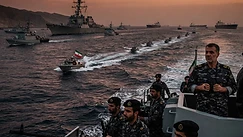
Tehran Outlines Formal Exclusion Zone Around Hormuz to Counter US Blockade
Iranian security officials have announced imminent plans to implement an operational maritime exclusion zone stretching from the U.S. naval blockade perimeter directly across the Strait of Hormuz.

US Neutralizes IRGC Tankers off Kharg Island as Diplomatic Narrative Fractures
U.S. Central Command disabled three Iranian crude carriers over the weekend following IRGC missile launches against American warships, escalating the maritime conflict into its seventh month.

CENTCOM Destroys Iranian Tankers and Coastal Launch Sites as Tehran Claims Drone Intercepts
U.S. Central Command struck three Iranian oil tankers and pre-positioned coastal minelaying missile platforms, while Tehran claimed to strike an unmanned American naval vessel in contested Hormuz waters.