Houthi Missile Strikes on MV LAAX Highlight Persistent Risks to Red Sea Transit
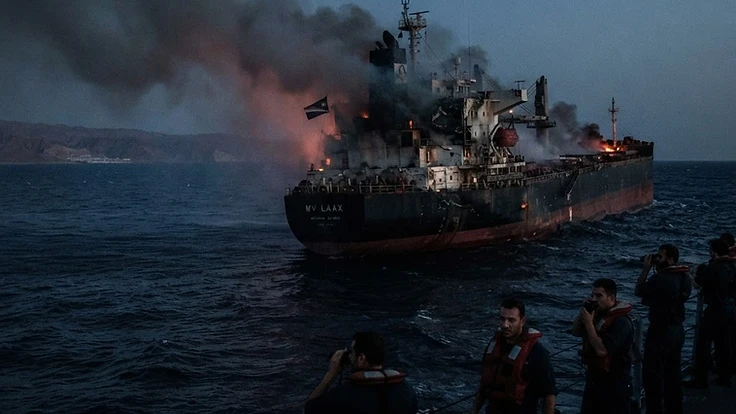
The Marshall Islands-flagged bulk carrier MV LAAX was struck by multiple Houthi missiles in the Red Sea, causing water ingress but no casualties.

Your ad here — 728×90 banner space
In a significant escalation of maritime hostilities, Houthi forces launched a multi-missile attack on the MV LAAX, a Marshall Islands-flagged, Greek-operated bulk carrier, while it was transiting the Red Sea off the coast of Yemen. According to reports from the U.S. Central Command (CENTCOM) and maritime security firms including Ambrey, the vessel was targeted by three anti-ship ballistic missiles. The vessel reported taking on water after the impact, though the crew managed to stabilize the ship and continue to its next port of call.
This incident marks one of the most direct hits on a merchant vessel in recent weeks, underscoring the ongoing threat to global supply chains. The Houthi movement, which claims these actions are in solidarity with Palestinians in Gaza, has expanded its target list to include any vessels associated with companies that dock at Israeli ports. Security analysts note that the MV LAAX was targeted despite having no immediate clear links to Israeli ownership, suggesting a widening of the Houthi 'Stage 4' escalation.
CENTCOM officials confirmed that U.S. forces successfully destroyed five Houthi uncrewed aerial systems (UAS) over the Red Sea within the same 24-hour window, preventing further strikes on the coalition and merchant fleet. The persistence of these attacks continues to force major shipping lines to divert around the Cape of Good Hope, adding approximately 10 to 14 days to transit times and significantly increasing carbon emissions and fuel costs.
Market reaction to the strike was immediate, with insurance premiums for Red Sea transits remaining at elevated levels, often exceeding 1% of the ship's value. The Suez Canal Authority has reported a 50% drop in revenue since the start of the year due to the diversions. As long as the Houthi capability to strike moving targets remains intact, the 'shadow blockade' of the Bab al-Mandab Strait effectively remains in place, placing additional pressure on the Strait of Hormuz as the primary alternative energy artery.
Related Intel

Tehran Outlines Formal Exclusion Zone Around Hormuz to Counter US Blockade
Iranian security officials have announced imminent plans to implement an operational maritime exclusion zone stretching from the U.S. naval blockade perimeter directly across the Strait of Hormuz.

US Neutralizes IRGC Tankers off Kharg Island as Diplomatic Narrative Fractures
U.S. Central Command disabled three Iranian crude carriers over the weekend following IRGC missile launches against American warships, escalating the maritime conflict into its seventh month.

CENTCOM Destroys Iranian Tankers and Coastal Launch Sites as Tehran Claims Drone Intercepts
U.S. Central Command struck three Iranian oil tankers and pre-positioned coastal minelaying missile platforms, while Tehran claimed to strike an unmanned American naval vessel in contested Hormuz waters.