Houthi Forces Claim Missile Strike on Bulk Carrier MV Yannis in Gulf of Aden
The Malta-flagged bulk carrier MV Yannis was targeted by Houthi missiles south of Al Mukalla, highlighting ongoing risks to commercial shipping.

Your ad here — 728×90 banner space
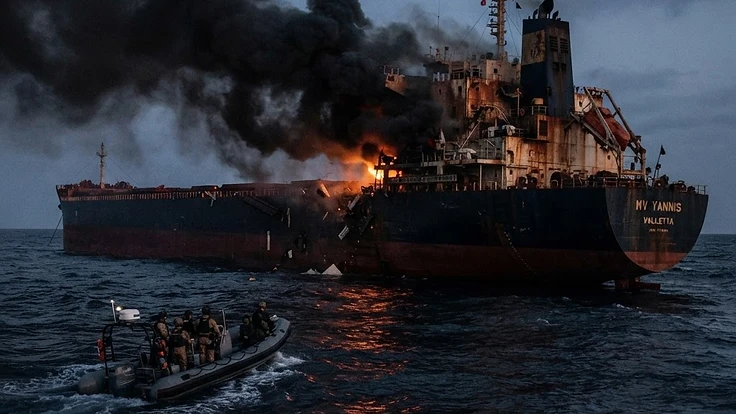
Late on May 23, 2024, maritime security agencies reported a fresh attack on commercial shipping in the Gulf of Aden. The vessel, identified as the MV Yannis, a Malta-flagged, Greek-managed bulk carrier, was targeted by what is believed to be an anti-ship ballistic missile launched from Houthi-controlled territory in Yemen. According to the United Kingdom Maritime Trade Operations (UKMTO), the vessel reported an explosion in its vicinity, approximately 98 nautical miles south of Al Mukalla, Yemen. The Houthi military spokesperson, Yahya Saree, later claimed responsibility for the attack, stating the vessel was targeted because it belonged to a company that continues to trade with Israel. The MV Yannis is managed by Eastern Mediterranean Maritime (Eastmed), a firm that has been previously warned by the Houthi movement. Despite the proximity of the explosion, the crew reported no injuries, and the vessel continued on its journey toward its next port of call. This incident underscores the persistent threat to the Bab al-Mandab strait, which serves as the gateway to the Red Sea and eventually the Suez Canal. U.S. Central Command (CENTCOM) confirmed that its forces successfully engaged and destroyed two uncrewed aerial systems (UAS) over the Red Sea launched by the Houthis during the same 24-hour period. CENTCOM stated these systems presented an imminent threat to U.S. and coalition forces and merchant vessels in the region. The frequency of these engagements has reached a plateau, but the lethality remains a concern for global insurers. The implications for the Strait of Hormuz are indirect but significant. As the Houthis demonstrate their ability to target vessels in the Gulf of Aden, the Iranian navy has increased its patrols in the Strait of Hormuz, ostensibly to 'ensure security.' This dual-front pressure—proxies in the Red Sea and conventional forces in the Persian Gulf—creates a 'maritime pincer' that keeps global shipping costs elevated. Data from Clarkson’s Research indicates that container ship transits through the Suez Canal are down more than 70% compared to last year, with a corresponding increase in bunker fuel demand at ports like Singapore and Las Palmas as ships take the longer African route.
Related Intel

Tehran Outlines Formal Exclusion Zone Around Hormuz to Counter US Blockade
Iranian security officials have announced imminent plans to implement an operational maritime exclusion zone stretching from the U.S. naval blockade perimeter directly across the Strait of Hormuz.

US Neutralizes IRGC Tankers off Kharg Island as Diplomatic Narrative Fractures
U.S. Central Command disabled three Iranian crude carriers over the weekend following IRGC missile launches against American warships, escalating the maritime conflict into its seventh month.

CENTCOM Destroys Iranian Tankers and Coastal Launch Sites as Tehran Claims Drone Intercepts
U.S. Central Command struck three Iranian oil tankers and pre-positioned coastal minelaying missile platforms, while Tehran claimed to strike an unmanned American naval vessel in contested Hormuz waters.