Yemen's Energy Hub Ablaze: Assessing the Geopolitical Fallout of Israel's Hodeidah Strike
The Israeli Air Force targeted Houthi-controlled Hodeidah port in response to a drone strike on Tel Aviv, marking a significant escalation in the regional conflict.

Your ad here — 728×90 banner space
A Direct Confrontation
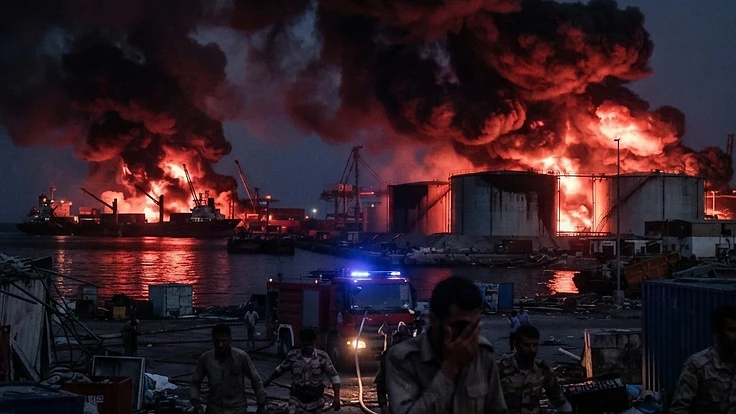
On Saturday, July 20, the Israel Defense Forces (IDF) conducted 'Operation Outstretched Arm,' a long-range aerial strike involving F-35 and F-15 fighter jets targeting the Houthi-controlled port of Hodeidah in Yemen. This action was a direct response to a Houthi drone—specifically a modified Iranian-made Sammad-3—that struck a residential building in Tel Aviv on Friday, killing one civilian and wounding several others. The strike on Hodeidah represents one of the longest-range missions in IDF history, spanning over 1,700 kilometers.
Impact on Energy Infrastructure
Satellite imagery and ground reports confirm that the strikes targeted fuel storage tanks and a power plant within the port complex. Massive fires broke out at the oil terminal, which serves as the primary entry point for fuel and humanitarian aid into northern Yemen. Houthi officials claimed the strikes killed at least six people and injured over 80. By targeting energy infrastructure, Israel has signaled a shift in strategy, moving from intercepting incoming threats to inflicting direct economic and logistical costs on the Houthi movement.
Houthi and Iranian Reaction
Houthi military spokesperson Yahya Saree vowed a 'huge' response, stating that the group would target 'vital sites' in Israel and that Tel Aviv is no longer a safe zone. Iran’s foreign ministry condemned the Israeli strikes, warning of a dangerous escalation that could ignite a wider regional war. Tehran’s involvement remains a focal point for Western intelligence, as the Sammad-3 drone used in the Tel Aviv attack is widely believed to be supplied or designed by Iranian technical experts.
Shipping and Insurance Risks
The escalation has immediate consequences for the shipping industry. War-risk premiums for vessels transiting the Red Sea are expected to remain elevated. While the Houthis have primarily targeted commercial vessels linked to Israel, the US, and the UK, the direct strike on Hodeidah may prompt the group to expand their target list or increase the frequency of their attacks. Naval forces from Operation Prosperity Guardian are increasing patrols, but the threat of 'swarm' drone attacks and anti-ship ballistic missiles remains a critical concern for tankers moving through the Bab el-Mandeb toward the Suez Canal.
Related Intel

Tehran Outlines Formal Exclusion Zone Around Hormuz to Counter US Blockade
Iranian security officials have announced imminent plans to implement an operational maritime exclusion zone stretching from the U.S. naval blockade perimeter directly across the Strait of Hormuz.

US Neutralizes IRGC Tankers off Kharg Island as Diplomatic Narrative Fractures
U.S. Central Command disabled three Iranian crude carriers over the weekend following IRGC missile launches against American warships, escalating the maritime conflict into its seventh month.

CENTCOM Destroys Iranian Tankers and Coastal Launch Sites as Tehran Claims Drone Intercepts
U.S. Central Command struck three Iranian oil tankers and pre-positioned coastal minelaying missile platforms, while Tehran claimed to strike an unmanned American naval vessel in contested Hormuz waters.