Golan Heights Escalation: Hezbollah Rocket Strike in Majdal Shams Triggers Retaliation Threats
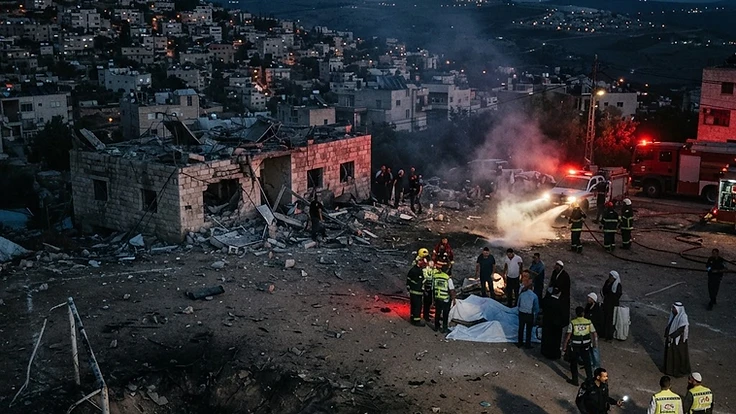
A devastating rocket attack on the Druze town of Majdal Shams has killed 12 children, marking the deadliest strike on Israeli-controlled territory since October 7.

Your ad here — 728×90 banner space
Regional Tensions Reach Breaking Point
The geopolitical landscape in the Levant shifted violently on Saturday when a rocket struck a soccer field in the Druze town of Majdal Shams, located in the Israeli-occupied Golan Heights. The strike resulted in the deaths of 12 children and teenagers, with dozens more injured. The Israel Defense Forces (IDF) identified the projectile as an Iranian-made Falaq-1 rocket carrying a 50kg warhead, launched from the Chebaa area in southern Lebanon.
While Hezbollah has issued an unusual categorical denial of responsibility, the IDF and Israeli intelligence services maintain that the group is the sole entity in the region capable of such an operation. Rear Admiral Daniel Hagari, the IDF spokesperson, stated that the radar data confirmed the flight path originated from Hezbollah-controlled territory. This incident represents the highest civilian death toll from a single strike in northern Israel or the Golan Heights since the cross-border skirmishes began in the wake of the Gaza conflict.
Political Consequences and Immediate Response
Prime Minister Benjamin Netanyahu, who was in the United States for high-level meetings and an address to Congress, announced he would cut his trip short by several hours to return to Israel for an emergency security cabinet meeting. Before departing Washington, Netanyahu warned that Hezbollah would 'pay a heavy price, one that it has not paid so far.' The Israeli Air Force has already conducted retaliatory strikes against seven Hezbollah targets deep inside Lebanon, including weapons caches and infrastructure in the Bekaa Valley and southern districts.
Internationally, the incident has sparked fears of a full-scale regional war. The United States has condemned the attack, with National Security Council officials reaffirming Israel's right to defend itself while simultaneously urging for a diplomatic solution to prevent further escalation. The Biden administration is reportedly engaged in intensive back-channel communications with Lebanese officials and regional intermediaries to contain the fallout.
Strategic Implications for Tehran
As the primary patron of Hezbollah, Iran remains central to the unfolding crisis. The Iranian Ministry of Foreign Affairs warned Israel against 'any new adventure' in Lebanon, suggesting that a major Israeli offensive could lead to 'unforeseen consequences.' For the newly elected Iranian President Masoud Pezeshkian, this crisis serves as a baptism by fire, testing his administration’s ability to manage regional proxies while attempting to signal a desire for decreased international isolation. The coming 48 hours are viewed by intelligence analysts as a critical window that will determine if the conflict remains localized or expands into a multi-front regional conflagration involving direct Iranian intervention.
Related Intel

Tehran Outlines Formal Exclusion Zone Around Hormuz to Counter US Blockade
Iranian security officials have announced imminent plans to implement an operational maritime exclusion zone stretching from the U.S. naval blockade perimeter directly across the Strait of Hormuz.

US Neutralizes IRGC Tankers off Kharg Island as Diplomatic Narrative Fractures
U.S. Central Command disabled three Iranian crude carriers over the weekend following IRGC missile launches against American warships, escalating the maritime conflict into its seventh month.

CENTCOM Destroys Iranian Tankers and Coastal Launch Sites as Tehran Claims Drone Intercepts
U.S. Central Command struck three Iranian oil tankers and pre-positioned coastal minelaying missile platforms, while Tehran claimed to strike an unmanned American naval vessel in contested Hormuz waters.