Diplomatic Impasse: President Pezeshkian Rejects French Overtures for De-escalation
In a direct call with French President Emmanuel Macron, Iran’s Masoud Pezeshkian asserted that Iran will not remain silent against aggression, dampening hopes for a diplomatic breakthrough.
Your ad here — 728×90 banner space
Iranian President Masoud Pezeshkian held a pivotal telephone conversation with French President Emmanuel Macron on Wednesday, during which he reiterated Tehran’s intent to respond to the assassination of Ismail Haniyeh. According to Iranian state news agency IRNA, Pezeshkian told Macron that the Islamic Republic considers it its 'legal right' to retaliate against Israel, accusing Western nations of 'double standards' by calling for restraint while failing to condemn the breach of Iranian sovereignty. This call was part of a broader European diplomatic push to prevent a regional war that could involve Hezbollah and other Iranian proxies.\n\nPresident Macron reportedly urged Pezeshkian to avoid a cycle of military retaliation, emphasizing that a major conflict would have 'devastating consequences' for regional stability and Iran’s own economic recovery. However, the tone of the response from Tehran suggests that the new administration is aligning closely with the IRGC’s hardline stance. Pezeshkian criticized the U.S. and its allies for supporting Israel, stating that 'If the U.S. and Western countries truly want to prevent war, they must force Israel to stop the genocide in Gaza and accept a ceasefire.'\n\nThis diplomatic exchange occurs as Iran continues to conduct internal security reviews following the security lapse that allowed the Haniyeh assassination. Intelligence reports suggest that Iran is coordinating its response with members of the 'Resistance Axis,' including Hezbollah in Lebanon and the Houthis in Yemen. The U.S. State Department has been working through intermediaries in Switzerland and Oman to convey that any large-scale attack would meet a robust defensive response from the newly deployed F-22 squadrons and the USS Abraham Lincoln strike group.\n\nFor the intelligence community, the Pezeshkian-Macron call serves as a barometer for Iran’s current strategic thinking. While Pezeshkian campaigned on a platform of engagement with the West to lift sanctions, the Haniyeh incident has effectively backed the presidency into a corner. Failure to respond would be seen as a sign of weakness by the domestic military establishment, while an over-calibrated response risks a direct confrontation with the United States. The Sentinel assesses that Tehran is currently focused on a 'calculated' escalation—one significant enough to restore deterrence but designed to avoid a total war scenario that would jeopardize the regime’s survival.
Related Intel
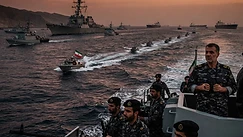
Tehran Outlines Formal Exclusion Zone Around Hormuz to Counter US Blockade
Iranian security officials have announced imminent plans to implement an operational maritime exclusion zone stretching from the U.S. naval blockade perimeter directly across the Strait of Hormuz.
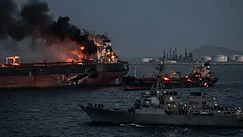
US Neutralizes IRGC Tankers off Kharg Island as Diplomatic Narrative Fractures
U.S. Central Command disabled three Iranian crude carriers over the weekend following IRGC missile launches against American warships, escalating the maritime conflict into its seventh month.
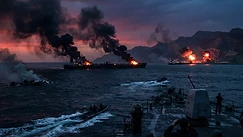
CENTCOM Destroys Iranian Tankers and Coastal Launch Sites as Tehran Claims Drone Intercepts
U.S. Central Command struck three Iranian oil tankers and pre-positioned coastal minelaying missile platforms, while Tehran claimed to strike an unmanned American naval vessel in contested Hormuz waters.