The Desalination Crisis: Iranian Tanker Slick Threatens Regional Water Security
Coordinated strikes on Iranian oil tankers near Bandar-Abbas have resulted in significant spills, raising alarms over the potential contamination of desalination plants in the Persian Gulf.

Your ad here — 728×90 banner space
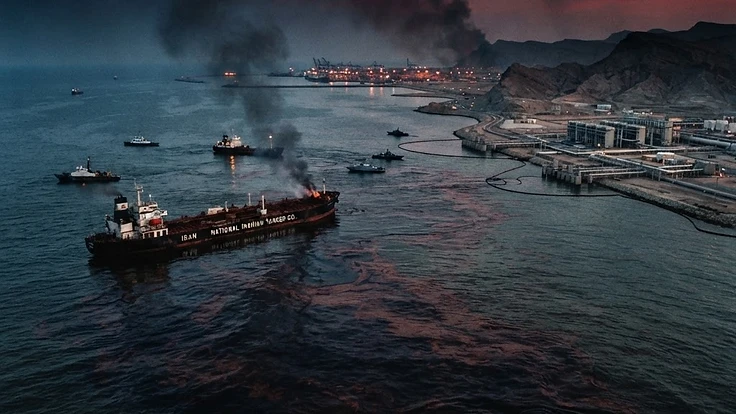
A new environmental and humanitarian threat is emerging in the Persian Gulf following reported strikes on several Iranian oil vessels near the port of Bandar-Abbas. On Friday, August 14, 2026, reports surfaced of massive precision strikes targeting tankers believed to be transporting crude oil from Iranian terminals. The resulting spills have created a significant oil slick that is now drifting toward critical infrastructure on the southern coast of the Gulf. Satellite imagery confirms the slick is expanding rapidly, driven by seasonal currents that are pushing the crude toward the Arabian Peninsula.\n\nThe immediate concern for regional governments is the impact on water security. The Persian Gulf provides approximately 40% of the world's desalinated water. If the oil slick reaches the intake valves of major desalination plants in the UAE or Saudi Arabia, it could clog filtration membranes, forcing a total shutdown. Given the region's total reliance on the sea for its potable water supply, a prolonged interruption would constitute a major humanitarian crisis. Local authorities are currently deploying boom barriers and skimming vessels to intercept the slick, but logistical desperation is growing as available storage and response capacity are stretched to their limits. Major facilities at Jubail and Jebel Ali are on high alert, with engineers monitoring water quality every hour.\n\nPresident Masoud Pezeshkian, in remarks on Iranian state television, blamed the environmental damage on the U.S.-Israeli blockade and the targeting of Iranian exports. The Iranian leader highlighted that high domestic inflation and the resulting economic hardship are being compounded by the physical destruction of energy assets. Tehran has warned that it may not have the resources to contain the spill if sanctions continue to block the import of specialized cleanup equipment. This environmental catastrophe is being framed by Tehran as a direct consequence of Western aggression, further entrenching the diplomatic divide.\n\nStrategic analysts suggest that the spill may be an intentional byproduct of the conflict, aimed at pressuring regional partners to distance themselves from the U.S. blockade. The environmental risk adds a layer of complexity to the naval operations in the region. U.S. Central Command has not officially commented on the specific strikes near Bandar-Abbas, though the administration has repeatedly stated its intent to degrade Iran's ability to finance its military operations through oil exports. For now, the focus remains on the intake pipes of Jubail and Jebel Ali, where a few hundred yards of oil film could trigger a region-wide water emergency that would affect millions of residents and industrial operations.
Related Intel

Strait Commodity Transits Plunge to Fresh Baselines Following Tit-for-Tat Tanker Strikes
Commercial traffic through the Strait of Hormuz has plummeted to an average of just 10 commodity vessels per day following mutual military attacks on commercial and state-linked tankers.
Strait Corridor Suppression Drags Commercial Transits Far Below Pre-War Baselines
Vessel transit figures through Hormuz remain deeply depressed, with tracking services recording single-digit crossings despite official claims of operational normalization.
Tehran Rejects Qatari Transit Initiatives as Regional Allied Navies Resist Unilateral Escort Commitments
Diplomatic sources confirm Iran has rebuffed Qatari mediation to ease Strait shipping controls, while key Asian allies push back on demands for independent naval deployments.