CENTCOM Intercepts Houthi Assets Following Israeli Retaliatory Strikes on Hodeidah
U.S. Central Command reports the destruction of multiple Houthi unmanned aerial vehicles as the Red Sea remains a volatile front following Israel's strike on Yemen.
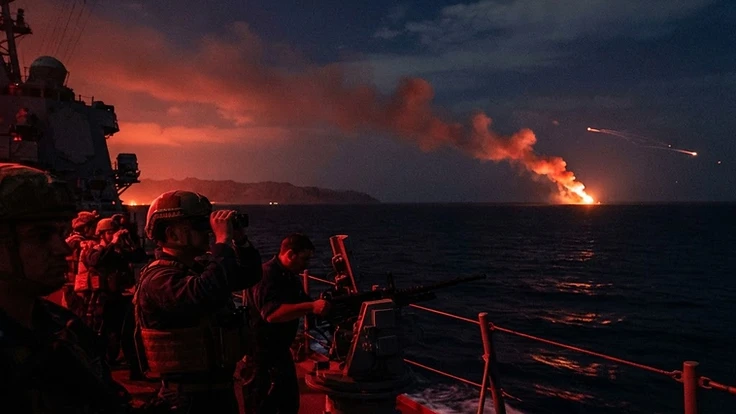
Your ad here — 728×90 banner space
U.S. Central Command (CENTCOM) confirmed on Monday that its forces successfully destroyed two Houthi unmanned aerial vehicles (UAVs) over the Red Sea and one on the ground in a Houthi-controlled area of Yemen. These operations come in the immediate aftermath of Israel's 'Operation Outstretched Arm,' which saw IAF F-15 and F-35 fighter jets strike fuel storage tanks and power stations at the port of Hodeidah on July 20. The Israeli strike, which resulted in at least six deaths and dozens of injuries according to local reports, was the first direct Israeli kinetic action on Yemeni soil. It followed the successful Houthi drone strike on Tel Aviv, which bypassed Israeli air defenses by using a modified 'Samad-3' drone. The Houthi leadership has vowed 'no limits' in its response to the Hodeidah attack, threatening to target 'sensitive' Israeli sites and continue its blockade of ships bound for Israeli ports. For the U.S. Navy's Operation Prosperity Guardian, the mission has shifted into a high-readiness defensive posture. Analysts at the Hormuz Sentinel Desk note that while the Hodeidah strike damaged significant fuel infrastructure, it did not eliminate the Houthi's mobile missile and drone launch capabilities. Iranian officials, including Foreign Ministry spokesperson Nasser Kanaani, condemned the Israeli strikes, warning of the risk of 'expanding the scope of the war.' This rhetoric is coupled with intelligence indicating that Iranian 'advisors' continue to provide targeting data to the Houthis from intelligence-gathering vessels in the region. The tactical situation remains critical for commercial shipping. While the number of weekly transits through the Bab el-Mandeb strait has stabilized at roughly 50% of pre-conflict levels, the complexity of the attacks is increasing. The use of 'drone swarms' and anti-ship ballistic missiles (ASBMs) continues to challenge Aegis-class destroyers stationed in the area. The Pentagon has reiterated that its actions are independent of Israel's strikes but aimed at maintaining the freedom of navigation in one of the world's most vital maritime arteries.
Related Intel

Tehran Outlines Formal Exclusion Zone Around Hormuz to Counter US Blockade
Iranian security officials have announced imminent plans to implement an operational maritime exclusion zone stretching from the U.S. naval blockade perimeter directly across the Strait of Hormuz.

US Neutralizes IRGC Tankers off Kharg Island as Diplomatic Narrative Fractures
U.S. Central Command disabled three Iranian crude carriers over the weekend following IRGC missile launches against American warships, escalating the maritime conflict into its seventh month.

CENTCOM Destroys Iranian Tankers and Coastal Launch Sites as Tehran Claims Drone Intercepts
U.S. Central Command struck three Iranian oil tankers and pre-positioned coastal minelaying missile platforms, while Tehran claimed to strike an unmanned American naval vessel in contested Hormuz waters.