US CENTCOM Commander Coordinates Regional Defense Coalition Amid Iran Threats
General Michael Erik Kurilla has arrived in the Middle East to finalize a multilateral defense strategy aimed at intercepting potential Iranian and Hezbollah strikes against Israel.
Your ad here — 728×90 banner space
General Michael Erik Kurilla, the commander of U.S. Central Command (CENTCOM), arrived in the Middle East on Monday as the Biden administration intensifies its efforts to build a regional defense coalition. This high-level diplomatic and military mission is designed to replicate the successful interception of over 300 Iranian drones and missiles on April 13. General Kurilla’s itinerary includes stops in Israel, Jordan, and several Gulf nations, where he is meeting with top defense officials to coordinate radar coverage, interceptor deployment, and intelligence sharing. In Israel, Kurilla met with IDF Chief of Staff Lieutenant General Herzi Halevi to review the 'Integrated Air and Missile Defense' (IAMD) architecture. The Pentagon has already ordered significant reinforcements to the region, including the USS Abraham Lincoln carrier strike group, which is equipped with F-35C stealth fighters, and an additional squadron of land-based F-22 Raptor air-superiority fighters. Furthermore, several U.S. Navy destroyers and cruisers capable of ballistic missile defense have been moved into the Eastern Mediterranean and the Red Sea. The primary objective is to deter Tehran and its proxies—specifically Hezbollah in Lebanon—from launching a multi-front coordinated attack that could overwhelm local defenses. Strategic planners are particularly concerned about 'saturation strikes' involving low-flying cruise missiles and suicide drones launched simultaneously from Iran, Iraq, Yemen, and Lebanon. Jordanian participation is seen as a critical component of this defense shield, as the kingdom’s airspace is a likely corridor for Iranian projectiles. While Jordan has publicly stated it will not become a 'battlefield,' its military previously intercepted Iranian drones in April to protect its own sovereignty. The mission also serves as a strong signal to Tehran that any escalation will be met by a unified front, potentially complicating Iran's tactical calculations. As the U.S. bolsters its footprint, the regional security posture remains at its highest level in months, with military assets positioned to respond at a moment's notice to any breach of territorial integrity.
Related Intel
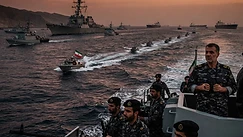
Tehran Outlines Formal Exclusion Zone Around Hormuz to Counter US Blockade
Iranian security officials have announced imminent plans to implement an operational maritime exclusion zone stretching from the U.S. naval blockade perimeter directly across the Strait of Hormuz.
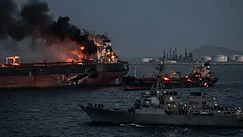
US Neutralizes IRGC Tankers off Kharg Island as Diplomatic Narrative Fractures
U.S. Central Command disabled three Iranian crude carriers over the weekend following IRGC missile launches against American warships, escalating the maritime conflict into its seventh month.
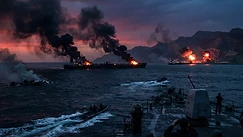
CENTCOM Destroys Iranian Tankers and Coastal Launch Sites as Tehran Claims Drone Intercepts
U.S. Central Command struck three Iranian oil tankers and pre-positioned coastal minelaying missile platforms, while Tehran claimed to strike an unmanned American naval vessel in contested Hormuz waters.