Capital Security Failure: Hamas Political Chief Ismail Haniyeh Assassinated in Tehran
The assassination of Hamas' top political leader in the heart of Tehran marks a massive intelligence breach and a critical escalation in the regional conflict.

Your ad here — 728×90 banner space
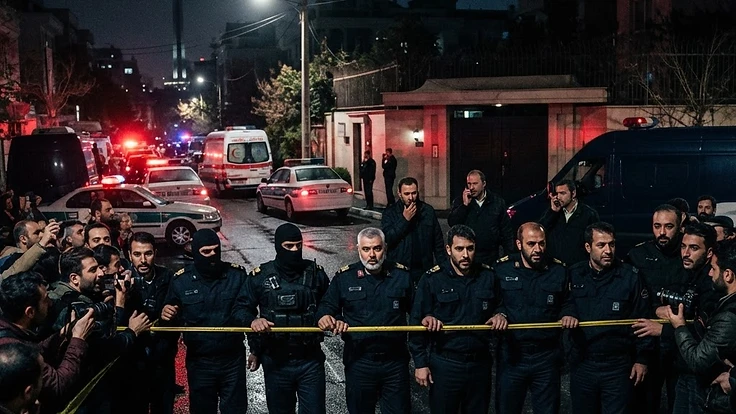
In a development that has sent shockwaves through the Middle East, the Islamic Revolutionary Guard Corps (IRGC) confirmed early Wednesday that Ismail Haniyeh, the political bureau chief of Hamas, was assassinated at his residence in Tehran. Haniyeh was in the Iranian capital to attend the inauguration of the newly elected President Masoud Pezeshkian. The strike, which also claimed the life of one of Haniyeh’s bodyguards, occurred just hours after he was seen embracing Iranian leadership during the official ceremony.
Iranian state media reports that the attack was carried out via an 'airborne projectile,' though the exact nature of the weapon—whether a drone-launched missile or a long-range asset—remains under intense investigation by Iranian security services. The breach of security is particularly significant given the high-alert status of the city during the presidential transition. The IRGC issued a statement vowing a 'harsh and painful' response, characterizing the act as a violation of Iranian sovereignty and international law.
While Israel has not officially claimed responsibility for the operation, the strike follows months of vowed retaliation for the October 7 attacks. Israeli officials have previously stated that all Hamas leadership figures are legitimate targets globally. The assassination represents a significant blow to Hamas’ diplomatic and political operations, as Haniyeh was a key interlocutor in ongoing ceasefire and hostage negotiations mediated by Qatar and Egypt.
Diplomatic sources in Doha and Cairo have expressed deep concern that this event may effectively terminate current negotiation tracks. The killing of a high-profile guest on Iranian soil places the Islamic Republic in a strategic corner, compelling a response to maintain internal and regional credibility. Initial reports suggest that the Supreme National Security Council has convened an emergency session presided over by Supreme Leader Ayatollah Ali Khamenei. Analysts indicate that this event crosses several established 'red lines,' shifting the conflict from a shadow war into a phase of direct confrontation potential between Tehran and West Jerusalem. US officials, including Secretary of State Antony Blinken, have stated they were not informed of the strike in advance, stressing the urgent need for a ceasefire to prevent further regional spillover.
Related Intel

Tehran Outlines Formal Exclusion Zone Around Hormuz to Counter US Blockade
Iranian security officials have announced imminent plans to implement an operational maritime exclusion zone stretching from the U.S. naval blockade perimeter directly across the Strait of Hormuz.

US Neutralizes IRGC Tankers off Kharg Island as Diplomatic Narrative Fractures
U.S. Central Command disabled three Iranian crude carriers over the weekend following IRGC missile launches against American warships, escalating the maritime conflict into its seventh month.

CENTCOM Destroys Iranian Tankers and Coastal Launch Sites as Tehran Claims Drone Intercepts
U.S. Central Command struck three Iranian oil tankers and pre-positioned coastal minelaying missile platforms, while Tehran claimed to strike an unmanned American naval vessel in contested Hormuz waters.