Maritime Strike Rocks Strait of Hormuz Following 'Economic D-Day' Launch
A commercial vessel was struck by a projectile in the Strait of Hormuz just hours after the U.S. administration unveiled its 'Economic D-Day' pressure campaign.

Your ad here — 728×90 banner space
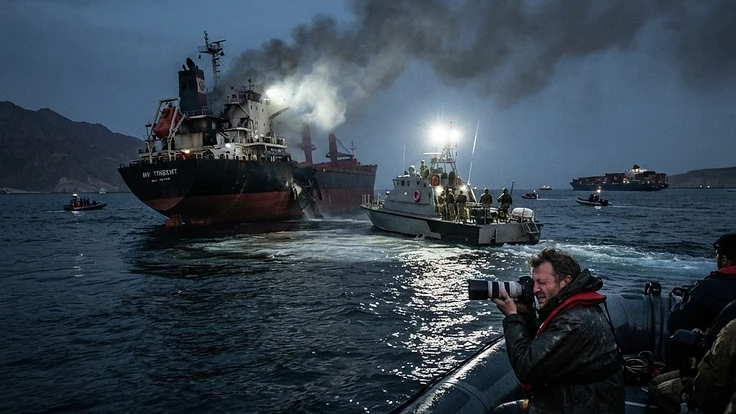
Tensions in the Persian Gulf reached a new flashpoint on August 25, 2026, as a commercial vessel transiting the Strait of Hormuz was reportedly struck by a projectile. The incident occurred shortly after the U.S. government initiated its 'Economic D-Day' campaign, a massive escalation in financial and maritime pressure intended to force Tehran back to the negotiating table. According to reports from The War Zone, the strike targeted a ship exiting the waterway, further destabilizing a region already reeling from a 177-day partial closure.
Data from Straits Live indicates that commercial traffic through the world’s most vital energy chokepoint remains at historic lows, with recent counts showing only one vessel transiting on August 16—roughly 1% of typical volume. The latest attack underscores the extreme risks facing the few shipowners still willing to navigate the passage. Prediction markets on platforms like Polymarket now price the odds of the Strait returning to normal operations by the end of August at less than 1%, reflecting deep skepticism among global traders.
President Donald Trump has maintained a hardline stance, recently asserting that the U.S. naval blockade of Iranian ports remains in 'full force and effect.' In a controversial move, the President also shared social media posts suggesting the Strait of Hormuz be viewed as 'American territory,' a claim that has drawn sharp rebukes from regional leaders and international legal experts. Despite these claims, the U.S. insists the waterway is technically 'open and operating' for non-Iranian traffic, though maritime insurers and shipping giants largely disagree.
The strike follows a period of relative stagnation in Pakistan-mediated peace talks. While Oman has attempted to broker a joint management plan for the Strait, the U.S. administration has reportedly threatened diplomatic and economic consequences for Muscat if the deal favors Iranian interests. The White House has not yet identified the source of the projectile, but regional analysts point to the sophisticated drone and missile capabilities of the Islamic Revolutionary Guard Corps (IRGC) as the primary threat to shipping in the area. As the 'Economic D-Day' measures begin to take hold, the risk of asymmetric retaliation in the maritime domain appears to be the new baseline for global energy security.
Related Intel


U.S.-Iran Diplomatic Impasse Persists Despite Regional Mediation Efforts
Diplomatic channels between Washington and Tehran remain largely stagnant as both sides hold firm on their respective conditions for a lasting ceasefire.


White House Declares Hormuz International Waters Clear of Mines
President Trump asserts that U.S. Space Force monitoring has confirmed the removal of naval mines from key transit lanes.
Basij Leadership Reasserts Control Over Strait of Hormuz
The head of Iran's Basij paramilitary unit has declared the Strait of Hormuz to be under Tehran's 'control and management,' complicating international efforts to restore free navigation.