Houthi Forces Target Saudi Tanker Near Yanbu Amid Regional Spillover
Yemen's Houthi rebels claimed a successful strike on a Saudi oil tanker in the northern Red Sea, threatening alternative energy routes.

Your ad here — 728×90 banner space
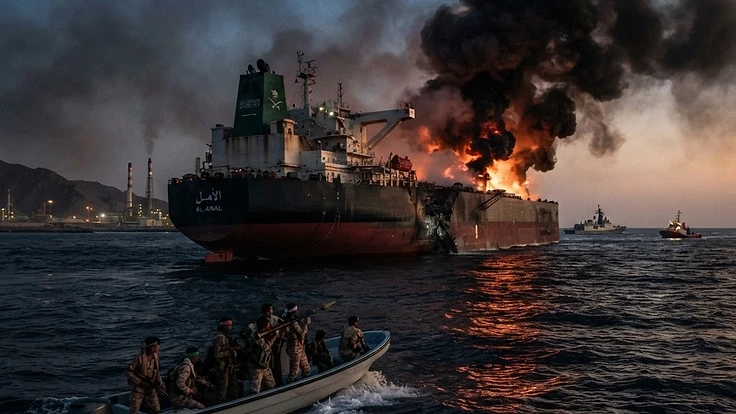
As the blockade of the Strait of Hormuz enters its sixth month, the conflict is increasingly spilling over into the Red Sea. On August 24, 2026, a spokesperson for the Yemeni armed forces announced that Houthi rebels had targeted a Saudi oil tanker off the coast of Yanbu. The attack, reported by IRNA, marks a significant escalation in the rebels' ability to strike deep into the northern Red Sea, far from their traditional strongholds near the Bab el-Mandeb Strait.
The targeting of Yanbu is particularly strategic, as the port serves as a major terminal for Saudi Arabia’s East-West Pipeline. This pipeline was designed specifically to allow Saudi crude to bypass the Strait of Hormuz, reaching global markets via the Red Sea. By demonstrating the ability to strike vessels near Yanbu, the Houthis—and by extension their backers in Tehran—are signaling that no maritime route in the region is truly safe.
Maritime security firms have issued urgent advisories for vessels operating in the Red Sea, noting that the Houthis are utilizing a mix of one-way attack drones and anti-ship cruise missiles. The U.S. Energy Information Administration (EIA) has previously warned that the Bab el-Mandeb is a critical chokepoint, with nearly 10% of global seaborne oil trade passing through it. If both Hormuz and the Red Sea routes are compromised, the global economy faces a 'double-chokepoint' crisis that could push oil prices well above $100 per barrel.
In response to the strike, Saudi naval forces have increased patrols around Yanbu and the King Fahd Industrial Port. However, the asymmetric nature of the Houthi attacks makes total protection difficult. The U.S. Fifth Fleet, currently occupied with the blockade in the Persian Gulf, has limited assets to spare for Red Sea escort duties. Shipping companies are now being forced to consider the Cape of Good Hope route for all Middle Eastern exports, a detour that adds approximately 10 to 14 days to voyages and significantly increases fuel and insurance costs. The 'crisis pressure' index maintained by Straits Live has reached 91 out of 100, categorized as 'extreme,' following this latest maritime incident.
Related Intel

Strait of Hormuz Traffic Remains at Historic Lows Amid Security Risks
Maritime traffic through the Strait of Hormuz continues to languish at 90% below normal levels as shipowners avoid the region due to persistent security threats.
Shipping Traffic Remains Volatile Amidst Naval Blockade
Despite a 27% increase in traffic last week, shipping through the Strait of Hormuz remains highly restricted and subject to intense naval oversight.
Maritime Security Remains Fragile as Tankers Navigate 'Dark' Routes
Commercial shipping continues to face extreme risks in the Persian Gulf, with vessels increasingly operating in the dark to avoid detection and potential attack.