U.S. Central Command Intensifies Strikes on Houthi Launch Sites
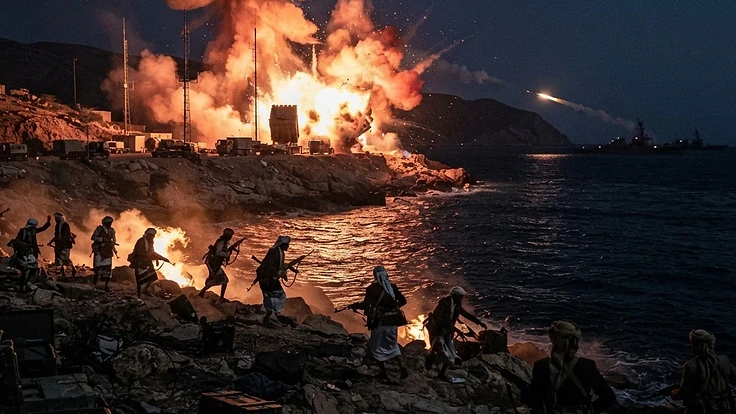
U.S. forces have conducted a series of self-defense strikes against Houthi-controlled assets in Yemen, targeting radar systems and drone launch platforms. The operations follow a series of sophisticated attacks on merchant shipping in the Gulf of Aden.

Your ad here — 728×90 banner space
U.S. Central Command (CENTCOM) confirmed late yesterday that its forces successfully destroyed two Houthi anti-ship cruise missile launchers and a ground control station in Houthi-controlled areas of Yemen. The strikes were characterized as 'self-defense' measures intended to protect freedom of navigation and make international waters safer for U.S., coalition, and merchant vessels. According to the CENTCOM statement, these assets presented an imminent threat to regional stability and maritime security. The recent escalation comes after Houthi forces demonstrated increased technical proficiency, utilizing a combination of aerial drones, cruise missiles, and unmanned surface vessels (USVs) to target commercial traffic. The attack on the MV Verbena, which resulted in a severely injured civilian mariner and a fire that forced the crew to abandon ship, has been cited by Pentagon officials as a turning point in the frequency of U.S. kinetic responses. U.S. naval assets, including the USS Philippine Sea and the USS Laboon, have been actively engaged in intercepting incoming threats daily. Despite the sustained air campaign, Houthi leadership remains defiant. Yahya Sarea, the Houthi military spokesperson, stated that the group would continue its operations as long as the conflict in Gaza persists. Intelligence reports suggest that the Houthis continue to receive logistical support and intelligence from Iranian assets stationed in the region, including the Behshad, a suspected spy ship that has been repositioned multiple times to avoid direct confrontation. The U.S. approach currently focuses on degrading the Houthis' ability to launch attacks while avoiding a full-scale ground intervention. However, critics of the policy argue that the 'tit-for-tat' nature of the conflict is not providing sufficient deterrence. The Pentagon is reportedly reviewing its rules of engagement and force posture, considering the deployment of additional carrier strike group assets to the region to ensure a continuous presence. As the conflict enters this new, more aggressive phase, the risk of a miscalculation leading to a broader regional conflagration remains at its highest level in months.
Related Intel


U.S.-Iran Diplomatic Impasse Persists Despite Regional Mediation Efforts
Diplomatic channels between Washington and Tehran remain largely stagnant as both sides hold firm on their respective conditions for a lasting ceasefire.

White House Declares Hormuz International Waters Clear of Mines
President Trump asserts that U.S. Space Force monitoring has confirmed the removal of naval mines from key transit lanes.
Basij Leadership Reasserts Control Over Strait of Hormuz
The head of Iran's Basij paramilitary unit has declared the Strait of Hormuz to be under Tehran's 'control and management,' complicating international efforts to restore free navigation.