White House Signals Restraint as Iran-US Backchannel Eyes Hormuz Reopening
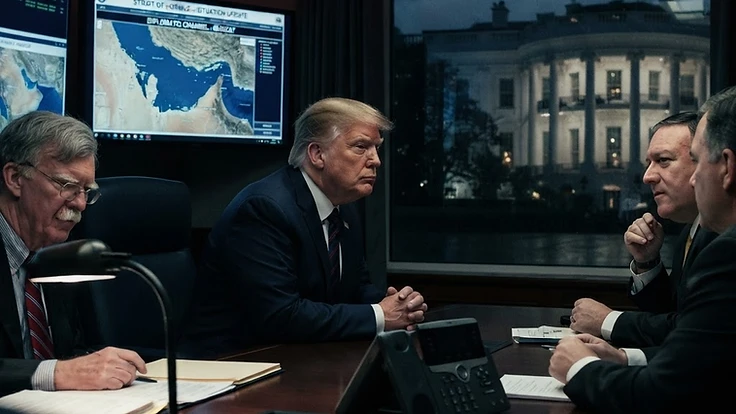
President Trump has reportedly paused planned kinetic operations against Iranian targets following a series of indirect diplomatic overtures in Muscat.

Your ad here — 728×90 banner space
Intelligence reports from Muscat indicate that the latest round of indirect negotiations between the United States and Iran has focused on a 'stability for access' framework. In early August 2026, President Trump reportedly called off a joint U.S.-Israeli strike against Iranian nuclear and drone facilities at the final hour. Sources familiar with the decision, cited by the Middle East Monitor, suggest the move was a response to direct requests from regional partners who fear a full-scale maritime war in the Strait of Hormuz.\n\nThe U.S. delegation in Oman, led by special envoy Steve Witkoff and Jared Kushner, has reportedly demanded the immediate and verifiable cessation of Houthi maritime attacks and the reopening of the Strait to unhindered oil traffic. In exchange, the U.S. has signaled a willingness to discuss limited sanctions waivers for humanitarian trade and the unfreezing of specific Iranian assets held in international banks. However, the presence of U.S. Central Command chief Admiral Brad Cooper at the talks—often in full dress uniform—serves as a reminder that the USS Abraham Lincoln and its strike group remain stationed in the Arabian Sea.\n\nTehran’s Foreign Minister, Abbas Araghchi, described the recent consultations as a “good start,” but emphasized that the lifting of economic sanctions remains a non-negotiable prerequisite for any formal return to a nuclear framework. The talks are complicated by the ongoing Houthi blockade in the Bab el-Mandeb, which Iran claims is an independent operation, despite U.S. intelligence showing direct IRGC coordination. \n\nAs the September 30 deadline for the U.S. withdrawal from Iraq approaches, the White House is prioritizing a reduction in direct entanglements. The strategy appears to be one of 'deterrence without escalation,' using the threat of overwhelming force to extract diplomatic concessions. The outcome of these Muscat talks will determine whether the current 'geopolitical risk premium' on oil prices—currently estimated at $12-$15 per barrel—remains baked into global markets throughout the third quarter of 2026.