US Strikes Iranian Launchers on Larak Island Following Maritime Threats
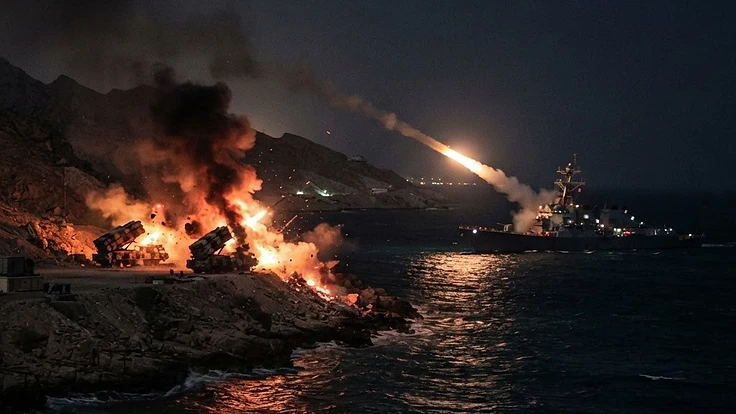
US Central Command launched precision strikes against Iranian missile launchers on Larak Island, marking the first direct kinetic engagement in the Strait of Hormuz in over a month.

Your ad here — 728×90 banner space
In a significant escalation of the ongoing maritime conflict, U.S. Central Command (CENTCOM) confirmed on August 31, 2026, that American forces conducted precision strikes against Iranian military infrastructure on Larak Island. The operation targeted mobile missile launchers and coastal radar installations that U.S. intelligence identified as immediate threats to commercial shipping in the Strait of Hormuz. According to a statement released by CENTCOM, the strikes were authorized by President Donald Trump to further degrade Iran's ability to threaten freedom of navigation in the strategic waterway. This engagement represents the first direct U.S. strike on Iranian territory in over thirty days, signaling an end to the relative lull in kinetic activity that had persisted through much of August. The strikes follow a series of incidents involving commercial vessels, including reports of mines being deployed in the shipping lanes near the Omani coast. 'At the direction of the Commander in Chief, U.S. Central Command forces have started conducting additional strikes against Iran to further degrade their ability to threaten freedom of navigation,' the CENTCOM statement read. Iranian state media initially downplayed the impact of the strikes but later reported that the Islamic Revolutionary Guard Corps (IRGC) had been placed on high alert. An adviser to the Supreme Leader warned of an 'immediate and proportional response' to what Tehran characterizes as an act of unprovoked aggression. The geopolitical risk premium on crude oil immediately reacted to the news, with Brent futures climbing as traders priced in the potential for a wider regional conflagration. Analysts at KCM noted that the strikes effectively terminate any lingering hopes for a diplomatic breakthrough in the near term. The timing is particularly sensitive as it coincides with the expiration of a 60-day informal ceasefire that had seen a marginal, though inconsistent, flow of traffic through the Strait. Shipping data from the last 24 hours indicates that only five vessels successfully transited the waterway, a staggering decline from the pre-war average of 140 daily passages. As the U.S. maintains its blockade of Iranian ports, the IRGC has reiterated its stance that the Strait will remain 'completely closed' to any vessel not coordinating directly with Iranian maritime authorities. This cycle of strike and counter-threat continues to paralyze the world's most vital energy chokepoint, leaving over 300 tankers effectively stranded in the Persian Gulf.
Related Intel


Diplomatic Impasse Deepens as Tehran Rejects New Talks
With the expiration of the June Memorandum of Understanding, diplomatic channels between Washington and Tehran have effectively collapsed.

US Resumes Strikes on IRGC Targets Following Hormuz Shipping Attacks
U.S. Central Command has launched a new wave of strikes against Islamic Revolutionary Guard Corps (IRGC) positions near the Strait of Hormuz after attempted attacks on commercial vessels.
Qatar Intensifies Mediation Efforts Amid Diplomatic Stagnation
Qatari officials have traveled to Tehran to push for a de-escalation of hostilities and the restoration of freedom of navigation in the Strait of Hormuz.