Regional Containment Strategies: US Diplomatic Channels Scramble to Limit Retaliatory Cycle
As the Middle East teeters on the edge of a regional war, the United States is utilizing backchannel communications to urge restraint from Tehran and its proxies.
Your ad here — 728×90 banner space
The dual assassinations of Ismail Haniyeh and Fuad Shukr have effectively frozen ongoing ceasefire negotiations for the Gaza conflict and shifted the international focus toward crisis management. The US State Department and the National Security Council are currently engaged in a frantic diplomatic effort to ensure that the inevitable Iranian and Hezbollah responses are 'calibrated'—designed to satisfy domestic demands for honor without triggering a full-scale Israeli counter-offensive.
Intelligence sources indicate that the US is using intermediaries, including Qatar and Oman, to relay messages to Tehran. The core of the message is twofold: Washington will continue to defend Israel against incoming attacks, but it does not seek a war with Iran. The challenge for US diplomacy is the 'humiliation factor' currently driving Iranian policy. By striking Haniyeh in a secure IRGC facility in Tehran, the operation was perceived not just as an attack on a proxy leader, but as a direct assault on the prestige of the Iranian state.
Simultaneously, the US is reinforcing its military posture in the region to act as a deterrent. The USS Theodore Roosevelt carrier strike group remains in the Gulf of Oman, and additional destroyers have been positioned in the Eastern Mediterranean. This 'dual-track' approach—intense diplomacy backed by visible force—aims to convince Iran that a massive escalation would be prohibitively costly. However, the effectiveness of this strategy is under scrutiny. Critics argue that the lack of clear 'red lines' for Israeli operations has left the US in a reactive posture, forced to clean up the diplomatic fallout of strikes it did not authorize or know about.
For the Hormuz Sentinel, the most critical indicator of success or failure will be the rhetoric coming from Tehran in the next 48 hours. If the Iranian leadership prioritizes its 'Axis of Resistance' coordination, we may see a delayed but synchronized strike. If the IRGC feels compelled to act immediately to save face, the window for diplomatic containment will likely close, leading to a period of kinetic activity that could disrupt global energy markets and maritime security indefinitely.
Related Intel

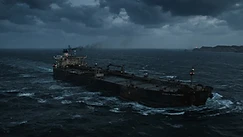
Diverging Transit Estimates Expose Fog of War Across Middle East Energy Routes
Conflicting transit claims from Washington and maritime tracking services underscore how information warfare has become central to energy price discovery.
Dual Blockade Dynamics and War Risk Premiums Paralyze Hormuz Commercial Vessel Throughput
Structural maritime paralysis grips the Persian Gulf as war-risk insurance premiums reaching eight percent combine with active minelaying to throttle baseline throughput.
Strait Risk Matrix Elevates as Daily AIS Transits Compress to Low Single Digits
Real-time maritime tracking indicates commercial vessel transits through the Strait of Hormuz have collapsed to historic lows, with only four active merchant hulls tracked along the primary corridor.