US Adopts 'Tanker for Tanker' Retaliatory Doctrine Against IRGC Vessels
The United States has shifted to a direct retaliatory posture in the Strait of Hormuz, striking two IRGC-affiliated tankers following attacks on commercial shipping.

Your ad here — 728×90 banner space
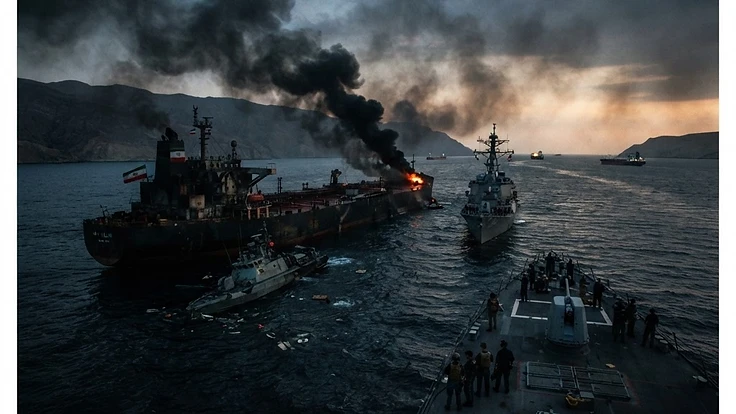
In a major tactical shift signaling an aggressive evolution in naval engagement rules, the United States military carried out precision drone strikes against two Islamic Revolutionary Guard Corps (IRGC) tankers anchored north of the US naval blockade line off Iran's coast. The strikes represent the initial execution of an operational directive approved by President Donald Trump characterized as a "tanker for tanker" policy.
According to defense officials and reporting from Axios cited by The Jerusalem Post, the US targeted the engine rooms of the two Iranian vessels using unmanned aerial systems. Previous rules of engagement had restricted US forces to intercepting and turning back vessels attempting to break CENTCOM maritime blockades or interdicting active offensive platforms. This new doctrine marks the first direct punitive targeting of Iranian state maritime transport assets.
The action follows a comprehensive retaliatory campaign that hit approximately 100 targets across Iranian littoral installations. These strikes disabled IRGC air defense batteries, coastal radar nodes, mine-laying craft, communications sites, and mobile anti-ship cruise missile and drone launchers. According to military briefers, the wide-area interdiction mission sought to "mow the lawn," effectively setting back Iranian capabilities to harass maritime corridors for an estimated 30 days.
President Donald Trump addressed the action on Truth Social, asserting that the US holds extensive tactical leverage over the waterway: "I like our position now much better, with almost total control of the Hormuz Strait, and their economy totally collapsing." Concurrently, US diplomatic posts issued regional security advisories after Iranian military spokespersons threatened retaliatory responses directed at American facilities across the Middle East, with explosions and security alerts already logged across Jordan, Bahrain, and Kuwait.
Regional security experts caution that while targeting engine compartments avoids catastrophic crude spills, treating state-owned tankers as legitimate retaliatory targets eliminates remaining gray-zone buffers. Maritime insurers are now recalibrating underwriting terms, anticipating asymmetric Iranian mine or drone swarms targeting Western-flagged logistics throughout the Gulf of Oman.