Strategic Calculus of US-Iran Relations Following Biden Presidential Exit
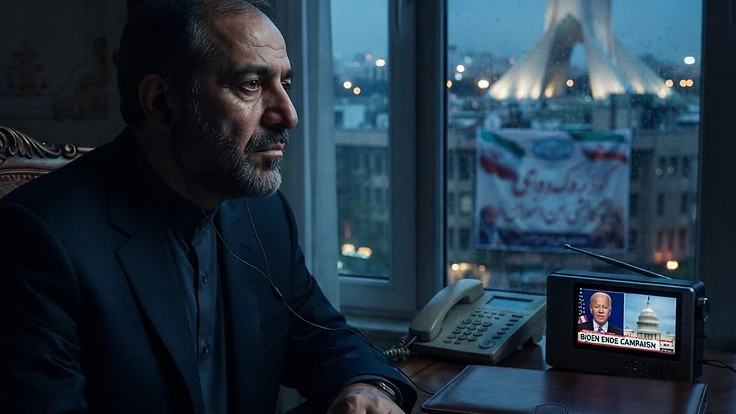
President Joe Biden's decision to end his re-election campaign introduces a period of potential strategic testing by Tehran as the US enters a lame-duck administration phase.

Your ad here — 728×90 banner space
Transition Dynamics and Regional Security
President Joe Biden’s announcement on July 21 that he will not seek re-election has sent ripples through the geopolitical landscape, particularly concerning the delicate balance of power in the Middle East. For Tehran, the shift in Washington’s political trajectory offers both opportunities and risks. Historical precedents suggest that periods of executive transition in the United States are often viewed by adversaries as windows of opportunity to test resolve. Intelligence analysts at the Hormuz Sentinel Desk are closely monitoring Iranian state media and diplomatic channels for signs of a shift in posture.
The Sanctions Regime and Enforcement
Under the Biden administration, the United States has maintained a policy of 'pressure and diplomacy,' though critics argue that sanctions enforcement on Iranian oil exports has been inconsistent. Recent data from tanker trackers indicates that Iran’s oil exports have hovered near five-year highs, often exceeding 1.5 million barrels per day, primarily destined for independent refiners in China. With Biden now a 'lame-duck' president, there is a prevailing question of whether the administration will tighten the screws on these 'ghost fleet' operations to prevent Tehran from capitalizing on a perceived power vacuum, or if the focus will shift entirely to domestic stability.
Tehran’s Response to a Shifting Washington
In Tehran, President-elect Masoud Pezeshkian is currently navigating the complex process of cabinet selection. While Pezeshkian campaigned on a platform of 'constructive engagement' and potential sanctions relief, the ultimate authority on foreign policy remains with Supreme Leader Ayatollah Ali Khamenei. The Supreme Leader recently reiterated that Iran’s support for the 'Axis of Resistance'—including Hezbollah, Hamas, and the Houthis—remains unshakeable regardless of the administration in Washington.
Military Posture and Red Sea Stability
US Central Command (CENTCOM) has maintained a robust presence in the region, particularly in response to Houthi attacks on commercial shipping. The transition period in the US creates a tactical challenge: maintaining a credible deterrent while avoiding a full-scale regional conflagration that could complicate the upcoming US election cycle. Observers note that any significant escalation by Iranian-backed proxies in the coming months will likely be met with a measured but firm US response, as the administration seeks to demonstrate that its security commitments remain intact despite the domestic political shift.
In summary, the next six months will be a period of high-stakes signaling. The US will likely continue its focus on preventing the Gaza conflict from expanding into a regional war, while Iran may use this period to bolster its nuclear leverage or strengthen its regional proxy network, betting on a distracted American electorate.