Tehran Vows Retribution: Supreme National Security Council Convenes Over Haniyeh Assassination
Iran's leadership has signaled a mandatory retaliatory strike following the targeted killing of Hamas political leader Ismail Haniyeh in a high-security Tehran compound.

Your ad here — 728×90 banner space
In the early hours of Wednesday, July 31, 2024, the Islamic Republic of Iran was jolted by a high-profile assassination on its own soil, targeting Ismail Haniyeh, the political chief of Hamas. Haniyeh was in Tehran to attend the inauguration of President Masoud Pezeshkian. The strike, which hit a secure guesthouse managed by the Islamic Revolutionary Guard Corps (IRGC) in northern Tehran, has triggered a severe security crisis for the Iranian establishment. Iranian Supreme Leader Ayatollah Ali Khamenei issued a formal statement shortly after the news broke, declaring it Tehran's 'duty' to seek revenge for the killing of a guest on Iranian territory. He stated that the 'Zionist regime' had prepared the ground for a 'harsh punishment' for itself. This rhetoric echoes the language used prior to the direct missile and drone attack launched against Israel in April, raising immediate concerns of a multi-front regional escalation.
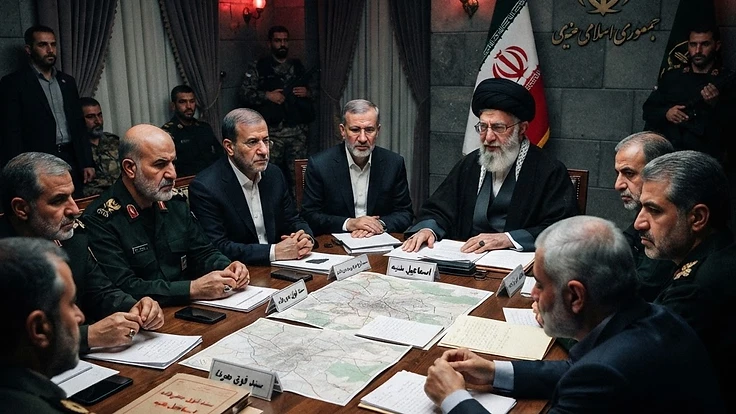
Security analysts at the Hormuz Sentinel have noted that the breach of a high-security IRGC facility indicates a significant intelligence failure within the Iranian security apparatus. The Supreme National Security Council convened an emergency session at the Leader’s residence, attended by top military commanders including IRGC chief Major General Hossein Salami. While Israel has not officially claimed responsibility for the Haniyeh strike—following its standard policy of ambiguity—the timing and precision are consistent with previous Mossad-attributed operations. The assassination occurred just hours after an Israeli airstrike in Beirut killed Fuad Shukr, a top military commander of Hezbollah. This double-tap of high-value targets has effectively dismantled the current framework of indirect negotiations. In Washington, Secretary of State Antony Blinken stated that the U.S. was 'not aware of or involved in' the Tehran strike, emphasizing a desire to prevent further escalation. However, the IRGC’s Quds Force is reportedly coordinating with its 'Axis of Resistance' partners in Iraq, Yemen, and Lebanon to determine the scale of a unified response. The impact on President Pezeshkian’s nascent administration is profound, as his campaign promises of diplomatic engagement now face a domestic environment dominated by hardline calls for immediate kinetic action. The intelligence desk monitors for signs of mobilized missile units in western Iran, which would serve as the primary indicator of an imminent strike.