Tehran Navigates Regional Escalation Following Hezbollah-Israel Exchange
Iran's leadership balances support for Hezbollah's recent strikes against Israel with a desire to avoid a direct, full-scale military confrontation with the U.S.
Your ad here — 728×90 banner space
In the wake of the massive exchange of fire between Hezbollah and Israel on August 25, Tehran has adopted a posture of 'calibrated support' for its primary proxy while signaling that it does not seek an immediate regional conflagration. The Israeli military launched pre-emptive strikes involving 100 fighter jets against thousands of Hezbollah rocket launchers, followed by a Hezbollah barrage of over 320 Katyusha rockets and drones aimed at northern Israel. Iranian Foreign Ministry spokesperson Nasser Kanaani praised the 'heroic' actions of Hezbollah but notably framed the event as a defensive measure within the existing rules of engagement.
Intelligence assessments suggest that the Iranian leadership, under the newly inaugurated President Masoud Pezeshkian, is currently prioritizing internal stability and the potential for sanctions relief over a direct kinetic conflict with Israel or the United States. However, the Islamic Revolutionary Guard Corps (IRGC) continues to maintain a high state of readiness. The presence of two U.S. carrier strike groups in the region—the USS Abraham Lincoln and the USS Theodore Roosevelt—serves as a potent deterrent against a direct Iranian response to the July assassination of Ismail Haniyeh in Tehran.
The Hormuz Sentinel Desk notes that the 'shadow war' is increasingly manifesting in the maritime domain. While the northern border of Israel remains the primary flashpoint, the threat to the Strait of Hormuz remains a secondary lever for Tehran. Iranian naval assets have increased their surveillance of commercial shipping, and there are reports of increased coordination between the IRGC-QF and Houthi elements in Yemen. The strategic goal for Tehran appears to be maintaining a 'ring of fire' around Israel through its proxies while keeping its own conventional forces in reserve. This strategy allows Iran to exert pressure on global energy markets and Western diplomacy without triggering a direct strike on its own soil, though the risk of miscalculation remains at its highest point in decades.
Related Intel
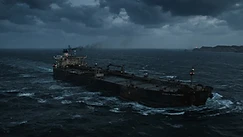
Regional De-escalation Efforts Intensify as Islamabad Joins Tehran Talks
Pakistan's military leadership has engaged in high-level discussions in Iran to prevent the current conflict from spiraling into a broader regional war.
U.S. Diplomatic Presence Returns to Middle East Amid Easing Rhetoric
The U.S. has begun returning personnel to diplomatic missions in the Middle East, a move interpreted by analysts as a signal that Washington is prioritizing de-escalation over military expansion.
Diplomatic Deadlock Persists as U.S.-Iran Talks Remain Stalled
With the 60-day negotiating window closed and no extension in sight, the U.S. and Iran remain entrenched in their respective positions, leaving the region in a state of high-stakes uncertainty.