Tehran’s Domestic Transition: How the Upcoming Presidential Election Shapes Iran's Regional Proxy Strategy
As Iran prepares for a snap presidential election on June 28, the selection of candidates suggests a consolidation of hardline power that will likely maintain support for the 'Axis of Resistance.'
Your ad here — 728×90 banner space
Following the death of President Ebrahim Raisi in a helicopter crash in May, Iran is moving toward a snap presidential election on June 28. The Guardian Council has approved six candidates out of 80 applicants, a selection process that heavily favors hardline and conservative figures aligned with Supreme Leader Ayatollah Ali Khamenei. Among the frontrunners are Mohammad Baqer Qalibaf, the current parliament speaker, and Saeed Jalili, a former nuclear negotiator known for his uncompromising stance toward the West. The inclusion of one reformist, Masoud Pezeshkian, is widely viewed by analysts as a strategic move to encourage voter turnout rather than a genuine opening for policy change.\n\nFrom a geopolitical perspective, the election results are unlikely to pivot Iran’s regional strategy. The Supreme Leader maintains ultimate authority over foreign and security policy, particularly concerning the 'Axis of Resistance'—the network of proxies including Hezbollah in Lebanon, the Houthis in Yemen, and various militias in Iraq and Syria. However, the next president will play a crucial role in managing the Iranian economy under the weight of U.S. sanctions and coordinating the budget for regional operations. A victory for a figure like Jalili could signal an even more defiant posture in nuclear negotiations and a deeper pivot toward the BRICS alliance and Russia.\n\nThe election comes at a sensitive time for the Islamic Republic, which is facing internal dissent and economic pressure. The U.S. State Department has stated it does not expect the election to lead to a fundamental change in Iran's behavior. Nevertheless, the transition period creates a window of potential vulnerability and opportunism. Regional actors are watching closely to see if the new administration will seek to cool tensions to stabilize the domestic economy or double down on maritime provocations in the Strait of Hormuz as a mean of domestic distraction and external leverage.\n\nDomestically, the candidates have focused their debates on the 'resistance economy,' a concept championed by Khamenei to make Iran self-sufficient and resilient against international pressure. Qalibaf has emphasized his managerial experience and infrastructure projects, while Jalili has focused on ideological purity and the rejection of the 2015 nuclear deal. The reformist Pezeshkian has called for 'constructive engagement' with the world, but his influence is limited by the oversight of the Guardian Council. The turnout will be a key metric of the regime's legitimacy; in the 2021 election, turnout hit a record low of 48.8%. A similarly low turnout could embolden hardliners to take even more aggressive stances to consolidate their base.
Related Intel
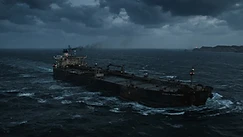
Diverging Transit Estimates Expose Fog of War Across Middle East Energy Routes
Conflicting transit claims from Washington and maritime tracking services underscore how information warfare has become central to energy price discovery.
Dual Blockade Dynamics and War Risk Premiums Paralyze Hormuz Commercial Vessel Throughput
Structural maritime paralysis grips the Persian Gulf as war-risk insurance premiums reaching eight percent combine with active minelaying to throttle baseline throughput.
Strait Risk Matrix Elevates as Daily AIS Transits Compress to Low Single Digits
Real-time maritime tracking indicates commercial vessel transits through the Strait of Hormuz have collapsed to historic lows, with only four active merchant hulls tracked along the primary corridor.