Strait of Hormuz Volatility Spikes Following Fresh Tanker Attacks
Commercial shipping faces renewed peril as reports emerge of a tanker being struck in the Strait of Hormuz, just hours after the U.S. unveiled its latest 'Economic D-Day' sanctions package.

Your ad here — 728×90 banner space
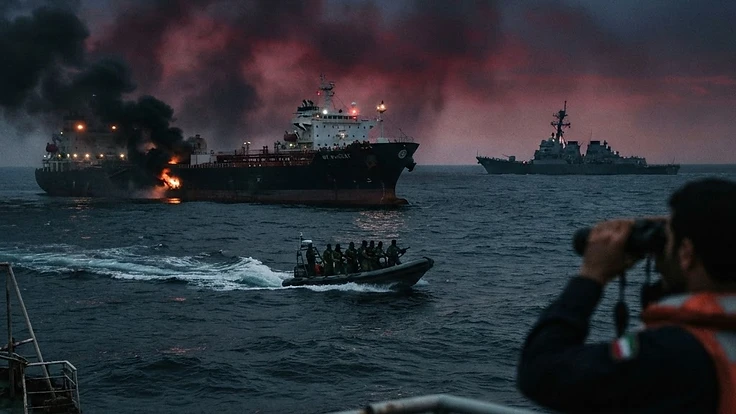
The security situation in the Strait of Hormuz has deteriorated sharply within the last 24 hours. Multiple reports, including confirmation from maritime security monitors, indicate that a tanker was struck while transiting the vital waterway, resulting in a fire on board. This incident follows Tehran's formal declaration that the waterway remains closed until the U.S. lifts its current blockade of Iranian vessels. The timing of the strike is particularly significant, occurring immediately after the U.S. Treasury Department, under Secretary Scott Bessent, launched what the administration has termed an 'Economic D-Day' campaign against Iran. This latest round of sanctions is designed to further isolate the Iranian economy, yet the immediate result has been a surge in kinetic activity within the Persian Gulf. While the U.S. military recently confirmed that all known mines in the Strait have been cleared, the threat to commercial shipping has shifted from static hazards to active targeting. Industry analysts note that the lack of a durable ceasefire has left the maritime corridor in a state of perpetual instability. Major oil trading houses and shipping firms are once again reassessing their risk profiles, with many opting to pause transits entirely. The incident underscores the failure of recent diplomatic efforts to secure a lasting maritime corridor, as both Washington and Tehran remain locked in a cycle of economic pressure and retaliatory strikes. As of this morning, the vessel involved in the attack is reportedly being assessed for damage, while regional maritime authorities have issued urgent warnings to all commercial traffic to exercise extreme caution or avoid the area until further notice.