Regional Stability Under Pressure as Mediation Efforts Stall
An assessment of the current geopolitical climate in the Gulf, where the failure of recent mediation attempts threatens to prolong the regional crisis.
Your ad here — 728×90 banner space
The failure of recent mediation attempts to secure a breakthrough in the Strait of Hormuz crisis has left the region in a state of heightened tension. Omani-led efforts, which were initially viewed as a promising path toward de-escalation, have struggled to reconcile the conflicting demands of Tehran and Washington. The introduction of new conditions by Iran, including the proposed transit fee structure, has effectively reset the diplomatic clock, leaving regional stakeholders to navigate an increasingly unpredictable environment. This analysis suggests that the current impasse is not merely a dispute over maritime access, but a reflection of deeper, unresolved issues regarding regional power dynamics and the future of the nuclear threshold. The economic impact of the crisis is being felt across the region, with Gulf states facing the dual challenge of managing energy security and mitigating the risk of spillover from the conflict. Furthermore, the lack of a clear timeline for a resolution is creating a vacuum that is being filled by increased military posturing. As the international community watches closely, the risk of miscalculation remains a primary concern. The path forward requires a fundamental shift in the current diplomatic framework, one that addresses the core security concerns of all parties involved while ensuring the stability of global energy markets. Without such a shift, the region is likely to remain in a state of precarious equilibrium, susceptible to sudden shocks and further escalation.
Related Intel
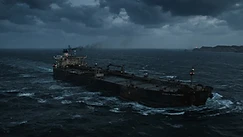
Diverging Transit Estimates Expose Fog of War Across Middle East Energy Routes
Conflicting transit claims from Washington and maritime tracking services underscore how information warfare has become central to energy price discovery.
Dual Blockade Dynamics and War Risk Premiums Paralyze Hormuz Commercial Vessel Throughput
Structural maritime paralysis grips the Persian Gulf as war-risk insurance premiums reaching eight percent combine with active minelaying to throttle baseline throughput.
Strait Risk Matrix Elevates as Daily AIS Transits Compress to Low Single Digits
Real-time maritime tracking indicates commercial vessel transits through the Strait of Hormuz have collapsed to historic lows, with only four active merchant hulls tracked along the primary corridor.