Qatar Declares Force Majeure on LNG Exports Amid Hormuz Transit Collapse
Qatar has officially declared force majeure on several liquefied natural gas contracts, citing the inability to guarantee safe passage through the Strait of Hormuz.
Your ad here — 728×90 banner space
The global energy market faced a severe shock on Monday as Qatar, the world's leading exporter of liquefied natural gas (LNG), declared force majeure on multiple long-term supply contracts. The move comes as the Strait of Hormuz remains effectively impassable for large-scale commercial traffic due to the intensifying conflict between the United States and Iran. Qatari officials stated that the decision was necessitated by the 'untenable risk' to vessel crews and cargo following recent mine attacks and the resumption of U.S. airstrikes on Iranian coastal positions. Qatar typically accounts for approximately 20% of the global LNG trade, and the suspension of its exports is expected to trigger immediate price spikes in European and Asian markets. Industry sources indicate that at least 329 oil and gas vessels are currently anchored within the Persian Gulf, unable to secure war-risk insurance or safe passage through the 21-mile-wide chokepoint. The declaration of force majeure allows Qatar to legally bypass its contractual obligations due to circumstances beyond its control, but it leaves major importers in Japan, South Korea, and the European Union scrambling for alternative supplies. 'The market is now grappling with tangible supply loss rather than just the fear of disruption,' noted a senior analyst at J.P. Morgan. The situation is further complicated by reports that Iranian authorities are demanding 'transit fees' or coordination protocols that the U.S. and its allies refuse to recognize. While some smaller tankers have attempted to navigate the Omani side of the Strait, the presence of naval mines near Khasab has deterred most major operators. Shipping giant CMA CGM and other global carriers have largely suspended operations in the region, rerouting vessels around the Cape of Good Hope where possible, though this is not a viable option for ships already trapped inside the Gulf. The economic impact of the Qatari declaration is likely to be felt globally, as LNG prices are a primary driver of electricity costs in many industrialized nations. With the Strait of Hormuz carrying one-fifth of global oil and LNG supplies before the conflict began in February, the current 'soft closure' represents one of the largest energy shocks in modern history. Diplomatic efforts led by Oman to establish a 'safe transit corridor' appear to have stalled following the latest round of U.S. strikes on Larak Island, leaving the energy sector in a state of high-stakes uncertainty.
Related Intel


Brent Crude Climbs as Geopolitical Risk Returns to Energy Markets
Global oil prices have surged to $95 per barrel as renewed military activity in the Gulf threatens to disrupt critical energy transit routes.

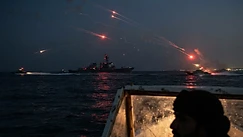
Oil Prices Rally as US-Iran Military Exchanges Resume in the Gulf
Crude oil benchmarks surged as renewed military strikes between US and Iranian forces near the Strait of Hormuz reignited supply fears.


Brent Crude Surges as US-Iran Military Exchange Rattles Energy Markets
Brent crude prices climbed above $90 per barrel following a weekend of reciprocal military strikes between the United States and Iran near the Strait of Hormuz.