Post-Raisi Power Dynamics: The Guardian Council and the Future of the Nuclear Threshold
As Iran enters a 50-day mourning and transition period, internal shifts among the clerical elite could signal a hardening of the nuclear stance.
Your ad here — 728×90 banner space
The sudden vacancy in the Iranian presidency following the death of Ebrahim Raisi has left the Islamic Republic at a critical crossroads. While the Supreme Leader, Ayatollah Ali Khamenei, has signaled continuity by appointing Mohammad Mokhber as acting president, the underlying power struggle for the June 28 election is already intensifying. The Guardian Council—the body responsible for vetting candidates—is expected to disqualify any moderate voices, likely narrowing the field to ultra-conservative figures who favor a 'Look East' policy and a more aggressive nuclear posture. From a geopolitical intelligence perspective, the most concerning development is the rhetoric surrounding Iran's nuclear breakout capacity. Recent statements from advisors to the Supreme Leader have suggested that if Iran faces an 'existential threat'—interpreted as a strike on its nuclear facilities or a total collapse of the maritime energy corridor—Tehran could reconsider its official fatwa against nuclear weapons. The IAEA has already confirmed that Iran’s stockpile of 60% enriched uranium is sufficient, if further enriched, for several nuclear warheads. This 'threshold status' is being used as a primary lever in the ongoing Oman backchannel talks. The Hormuz Sentinel Desk assesses that the interim government will likely maintain the status quo in the Strait of Hormuz to avoid an external crisis while managing domestic stability. However, the eventual winner of the June election will determine whether Iran seeks a long-term 'grand bargain' with the West or doubles down on its strategy of 'asymmetric friction' in the maritime domain. For global markets, this means a prolonged period of geopolitical risk premium, as the prospect of a return to the 2015 nuclear deal (JCPOA) appears increasingly remote.
Related Intel

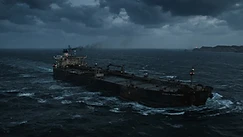
Diverging Transit Estimates Expose Fog of War Across Middle East Energy Routes
Conflicting transit claims from Washington and maritime tracking services underscore how information warfare has become central to energy price discovery.
Dual Blockade Dynamics and War Risk Premiums Paralyze Hormuz Commercial Vessel Throughput
Structural maritime paralysis grips the Persian Gulf as war-risk insurance premiums reaching eight percent combine with active minelaying to throttle baseline throughput.
Strait Risk Matrix Elevates as Daily AIS Transits Compress to Low Single Digits
Real-time maritime tracking indicates commercial vessel transits through the Strait of Hormuz have collapsed to historic lows, with only four active merchant hulls tracked along the primary corridor.