Operation Aspides Moves to Salvage Stricken Sounion Tanker Amid Houthi Threat
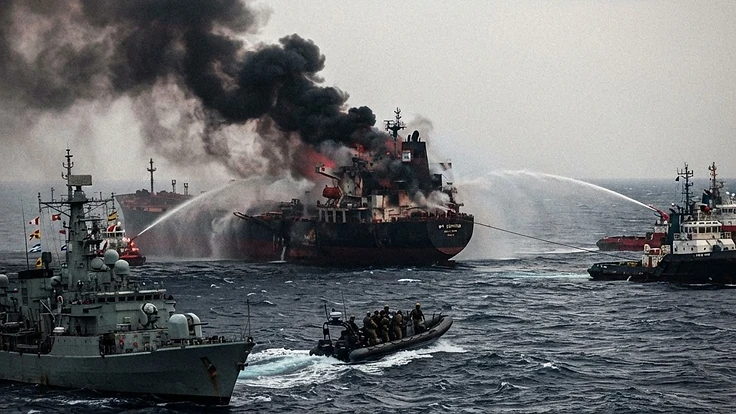
The European naval mission in the Red Sea has initiated a complex salvage operation for the MV Sounion, which remains on fire after Houthi attacks.

Your ad here — 728×90 banner space
The European Union’s naval mission, Operation Aspides, confirmed on Saturday that it has begun providing protection for the commercial tugs tasked with salvaging the MV Sounion. The Greek-flagged crude oil tanker, which was carrying approximately 150,000 tonnes of Iraqi crude, has been adrift and on fire since it was targeted by multiple Houthi projectiles on August 21. The situation represents one of the most critical environmental threats in the region since the start of the current maritime conflict. Houthi forces, which initially blocked access to the vessel, reportedly agreed to a temporary cessation of hostilities specifically for the salvage operation following discussions mediated by regional powers. However, military sources remain skeptical, noting that the Houthis have previously targeted vessels during rescue attempts. Satellite imagery analyzed over the last 24 hours shows at least five distinct fires on the deck of the Sounion, likely the result of explosive charges placed by Houthi boarding parties after the initial missile strikes. Operation Aspides officials stated that the goal is to tow the vessel to a safe location to prevent a massive oil spill that would dwarf the 1989 Exxon Valdez disaster. 'The risk of an environmental catastrophe is at an all-time high,' a mission spokesperson noted, emphasizing that a breach of the hull would devastate the Red Sea’s coral reefs and vital desalination plants. From a tactical perspective, the U.S. Central Command (CENTCOM) has maintained a distance to avoid escalating the delicate diplomatic arrangement that allowed the salvage to proceed, though American assets remain on high alert in the Gulf of Aden. The successful recovery of the Sounion is seen as a litmus test for maritime safety protocols in the region. If the vessel founders or leaks during the tow, the resulting ecological damage could lead to the closure of key shipping lanes, further straining global supply chains already reeling from the diversion of traffic around the Cape of Good Hope. The Hormuz Sentinel will continue to track the vessel's movement toward safer waters in the northern Red Sea.